Building a Stronger Brand With a Scalable Design System
How design systems turn brand principles into enforceable standards, keeping teams consistent across products, markets, and platforms without slowing them down.
 Nezar MansourContent Writer
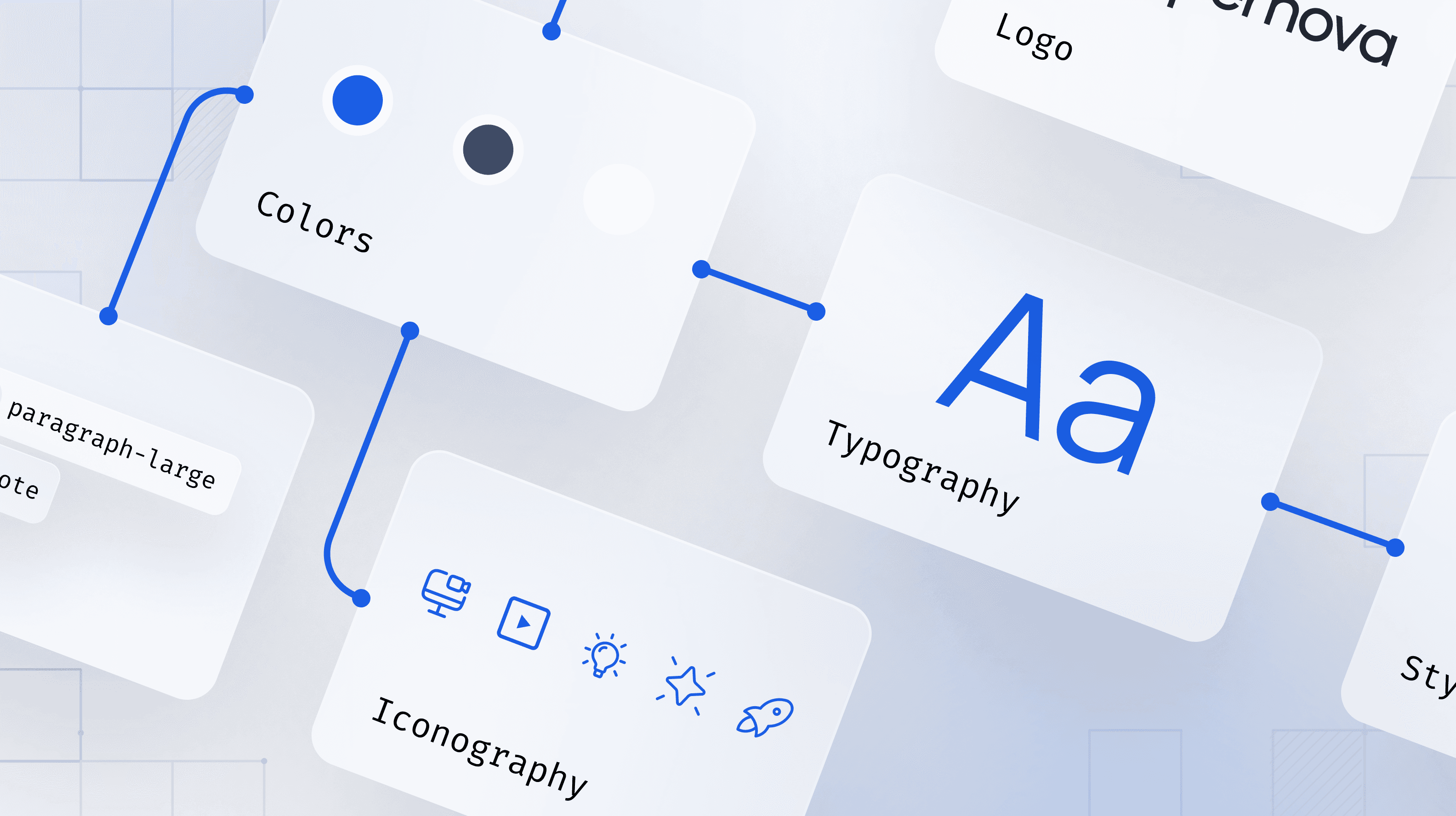
Most brand guidelines live in a PDF. They get shared during onboarding, referenced when someone asks why a color choice looks wrong, and largely ignored when teams are moving fast. By the time an organization is running three or more products, those guidelines have been interpreted differently by every team that touched them. The result is not brand anarchy. It's something harder to fix: gradual, quiet inconsistency that accumulates until customers notice it before the company does.
Design systems change this by making brand principles structural rather than advisory. A design token is not a suggestion; it's the value every component reads. A shared component is not a reference; it's the thing that actually gets built. When brand lives in the system layer, consistency stops depending on individual discipline and starts being enforced by the tools teams use every day.
Why brand consistency breaks as organizations scale
Scaling a brand is not just a design problem. It's a coordination problem. Every new product team, regional market, or platform introduces pressure to adapt the brand to local constraints. Some adaptation is necessary. The issue is that without a shared system, adaptation becomes drift, and drift compounds.
Common breakdowns at scale include:
- Fragmented color use: one team uses hex values from memory, another exports from a two-year-old Figma file, a third inherits values from a legacy codebase
- Typography inconsistency: different products choose different weights or sizes for similar content hierarchies, making them feel like separate brands
- Component divergence: each team solves the same UI patterns differently because there's no shared library to pull from
- Market-specific overrides that never reconcile: what starts as a one-time localization decision becomes a permanent fork
By the time leadership flags the inconsistency, the fixes are expensive. Dozens of surfaces need updates, multiple codebases need re-aligning, and teams have to revisit work they thought was done. A design system prevents this by making consistency the starting point, not the remediation.
Translate brand values into system foundations
Brand consistency starts with design tokens: the variables that store your brand's core values (colors, type scales, spacing, border radius, motion timing). When tokens are defined once and referenced everywhere, a brand decision made at the system level propagates to every product that uses it.
This sounds straightforward but requires deliberate architecture. Tokens work best in layers:
- Global tokens: raw values (the full color palette, the full type scale)
- Semantic tokens: values with meaning attached (color-action-primary, spacing-section, text-body)
- Component tokens: component-specific values that reference semantic tokens
The semantic layer is where brand personality lives. Changing what color-action-primary maps to updates every button, link, and interactive element across every product at once. Changing it without that layer means hunting for instances manually.
Twilio's Paste design system was built specifically to address brand consistency across a complex multi-product B2B environment. Paste's documentation frames it directly: the system exists to help teams build experiences that "look and feel like Twilio." Not similar to Twilio — Twilio. That clarity of purpose is what keeps the system anchored to brand outcomes rather than just component coverage.
Build in flexibility without opening the door to inconsistency
The instinct when brand consistency breaks down is to lock things down. Restrict color choices, mandate component use, require approval for anything non-standard. The result is usually a system that product teams route around because it can't accommodate their actual needs.
The better approach is controlled flexibility. Your system should have a clear hierarchy of constraint:
- Non-negotiable: core brand values (primary palette, typeface, logo usage). These live in global tokens and are not overridable.
- Configurable: product-specific themes, dark mode, density settings. These use token variants that still reference the global layer.
- Extensible: product teams can create new patterns by composing system components, but they can't modify the components themselves.
Harry's, the grooming company, built their design system specifically around multi-brand flexibility. "The Forge" manages the design infrastructure for multiple distinct brands under Harry's Inc., each with its own visual identity but sharing the same structural foundation. The token architecture is what makes this possible: brand-specific tokens sit on top of a shared layer, so a new brand launch is a configuration exercise rather than a rebuild.
This model works because it makes the guardrails invisible during normal use. Teams get the flexibility they need at the product level without touching the foundation.
Make on-brand the path of least resistance
A design system only maintains brand consistency if people actually use it. That sounds obvious, but most organizations have experienced the alternative: a system exists, teams know it exists, and they still build things from scratch because it's faster or the system doesn't cover their use case.
The goal is to make going off-brand more work than staying on it. That requires two things:
A component library that covers real product needs. If teams can't find what they need in the system, they build it elsewhere. Component coverage should be driven by what products actually ship, not what seems architecturally complete. Audit what gets built one-off most often and close those gaps first.
Documentation that makes the right choice obvious. Documentation is where brand rationale lives. When an engineer or designer understands why a pattern exists: what brand principle it expresses, what problem it solves. They're far less likely to replace it with something arbitrary. Intercom's Pulse design system was built around exactly this idea. Their "full-stack design system" connects the system model to the interface to the implementation to the documentation as a single coherent structure. The documentation isn't an afterthought; it's the thing that makes the components legible and trustworthy to the teams using them.
When teams reach for the system first because it genuinely solves their problem, brand consistency follows without enforcement.
Refresh the brand without rebuilding the product
A brand refresh used to mean a project. Months of work to update color palettes across dozens of screens, adjust type weights across multiple codebases, and reconcile inconsistencies that had built up since the last time anyone looked at everything together.
With a token-based design system, a brand refresh is a series of token updates. Change the semantic value, publish a new version, consuming teams update their dependency. Every component that references the token reflects the update. No archaeology, no per-screen corrections.
This is the long-term compounding benefit of treating brand as system infrastructure. The investment in getting tokens right pays out every time the brand needs to move. And brands move more often than they used to: new markets, new product lines, new competitive positioning. The organizations that can respond to those shifts quickly without breaking their existing product surfaces have a structural advantage over those that can't.
How Supernova helps brand teams maintain control at scale
One practical challenge brand teams face is that the design system's single source of truth often isn't actually single. Token definitions live in Figma. Component documentation lives in a separate site. Code implementations live in repositories that may or may not reflect the latest design decisions. The further these drift from each other, the more brand consistency degrades even when teams are trying to do the right thing.
Supernova's design system management connects these layers. Design tokens sync from Figma and generate code outputs automatically, so the values in the documentation are the values in the components. Supernova's documentation tooling lets brand teams publish guidelines, component usage rules, and brand rationale in the same place engineers look for implementation guidance, which means brand context doesn't get lost in a separate PDF that nobody opens.
For teams working on multi-brand or multi-product systems, Supernova's theming support lets teams manage token variants and brand-specific overrides within a single system rather than maintaining separate forks. The brand evolves in one place; the products reflect it everywhere.
Teams building the case internally for this kind of investment can start with Supernova's guide to getting executive buy-in for design systems. The business argument for brand-consistent design systems is strong; the guide helps you make it in the language leadership responds to.
Brand that scales is brand that's built into the system
A brand that lives only in guidelines will always lose to a product team under deadline pressure. The organizations that maintain brand coherence at scale are the ones that made consistency the default output of their tools, not the result of constant vigilance.
That's what a design system does for brand: it moves brand from something teams have to remember into something the system enforces automatically. Start with your tokens, close the gap between design and code, and document the rationale alongside the components. The brand takes care of itself from there.
Give your agents a system worth following
See how Supernova documents, syncs, and serves your system in one place.