We Just Shipped AI Context Management
We just shipped AI context management, so every team can give their AI agents the context they actually need.
 Barbora OlahovaProduct Marketing Manager
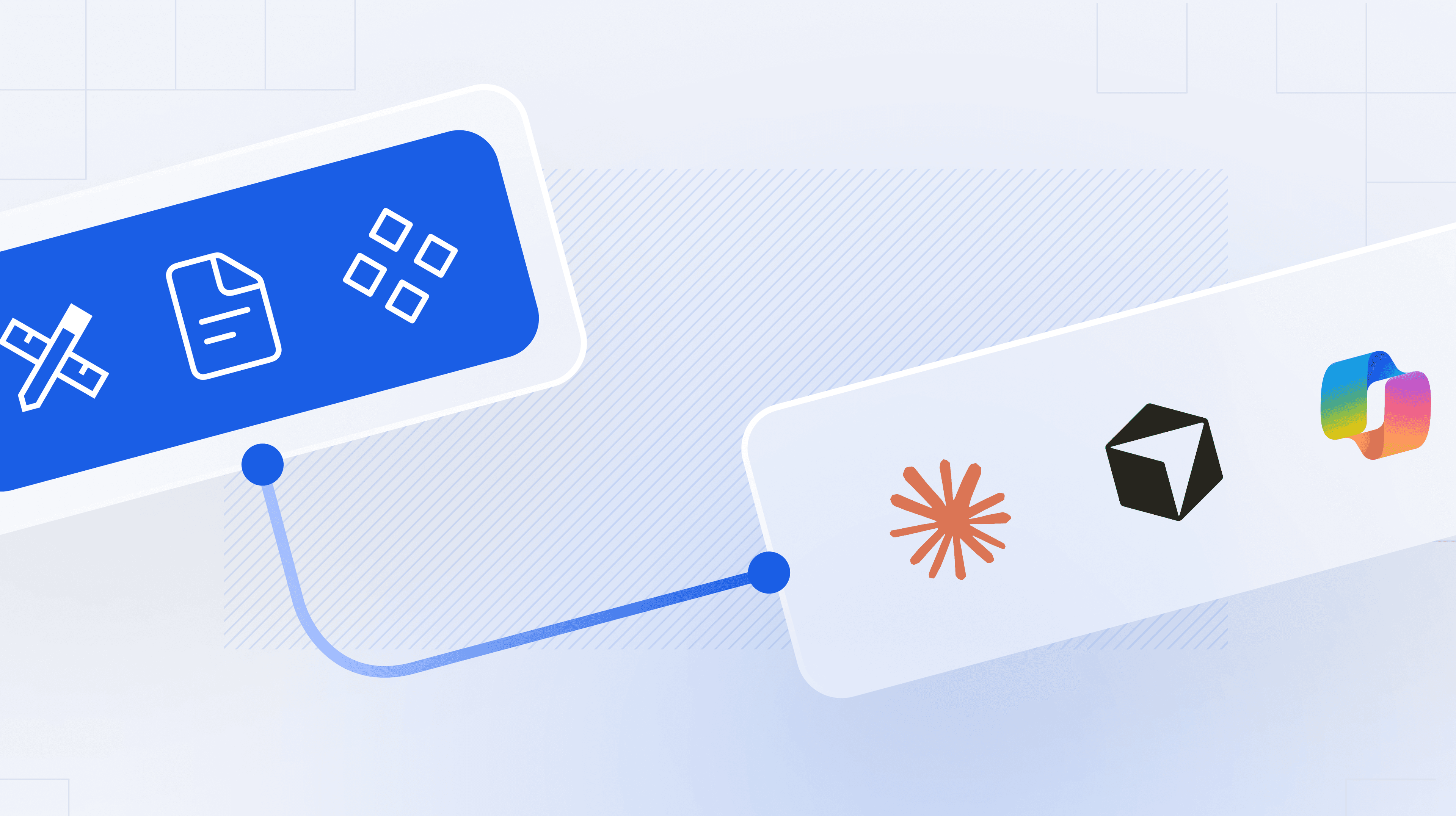
Your AI agents are only as good as the context you give them. Today, we're making it easy to give them the right context from your actual design system.
What We Built
AI context management lets you define exactly what each team's agents need to know (design tokens, component APIs, component patterns, usage data, rules, and docs) and publish it as a focused, context-scoped MCP endpoint. Every coding or design tool your team uses can be plugged in directly.
This is now available to all Supernova users. Plans start free, with higher tiers unlocking more contexts, more MCP consumers, and advanced governance features.
Why Context Is Everything
Most teams adopting AI coding tools hit the same wall quickly. Cursor knows how to write code. Copilot knows how to autocomplete. But neither knows your design system — your token names, your component APIs, how your team actually uses buttons, cards, or datagrids. So they guess. And the output doesn't match your product.
The problem isn't the AI tool. It's the missing context.
Supernova solves this at the source. Instead of every engineer manually feeding context into every agent, every time, you define it once and publish it to all of them simultaneously.
How It Works
Scope and tailor context per team
Not every team needs the same information. A front-end squad working on a checkout flow needs a different context than a platform team maintaining a design token pipeline. Supernova lets you define focused contexts per team, workflow, or agent type so each agent gets exactly what's relevant.
Publish as a context-scoped MCP endpoint
Each context publishes as its own MCP endpoint. Cursor, Copilot, Claude Code, Codex, or any MCP-compatible tool can plug in directly. No custom integrations, no manual syncing.
Give agents access to real component data
Agents get access to real component APIs: props, import paths, valid compositions, and usage patterns. Engineers get accurate answers without leaving their flow. No more hallucinated component names or incorrect prop signatures.
Manage and distribute skills
Beyond raw data, you can build, curate, and refine the capabilities your agents bring to every interaction: knowledge files, rules, and custom skills. Ship them through predefined or custom exporters when ready.
Update once, and every agent gets it instantly
When your design system changes, your context updates automatically. Every connected agent is working from current information without anyone having to manually push updates.
A Feedback Loop That Improves Over Time
Shipping context is only half the problem. Knowing whether it's working is the other half.
Supernova captures feedback from both engineers (manual flags) and agent interactions (automatic captures). When something's off — be it a gap in the data, a missing knowledge file, or a skill that needs refining — you get an actionable suggestion and a clear path to fix it.
What This Unlocks
- Agents that produce output aligned with your actual design system
- Reduced token usage; each team gets only the context they need
- Faster onboarding for new engineers, who get accurate, system-aware AI assistance from day one
- Design system teams with a direct channel to every agent their engineers use
- Consistent output across teams, without enforcing it manually
Get Started
Set up your first context and have your MCP endpoint live in minutes. Start for free today!
Want to learn more about AI contexts? Book a demo.
Give your agents a system worth following
See how Supernova documents, syncs, and serves your system in one place.