How PMs Use AI to Write Better, Faster PRDs
- Authors

- Name and Role
- Nezar MansourContent Writer
For Product Managers, the Product Requirements Document (PRD) is the backbone of any new feature. It is the contract between what users need and what engineering builds. But let’s be honest: writing them is a grind.
Although crafting a PRD is essential, the sheer volume of manual documentation often consumes valuable time that could be better spent on user research or strategic thinking. Worse, manual PRDs are prone to "drift", the moment a designer tweaks a prototype in Figma, your static document becomes outdated.
Relying on manual PRD creation poses a few critical risks:
- The Time Sink: Capturing edge cases, flows, and guidelines manually is a massive undertaking.
- The Alignment Gap: Unclear specs lead to inevitable back-and-forth conversations between design and dev.
- The "Zombie" Doc: Teams eventually stop trusting the PRD because it rarely matches the latest designs.
Fortunately, AI is emerging as a co-pilot, helping to bridge the gap between initial product exploration and generating clear, structured documentation. Here is how modern PMs are using AI to turn specification writing from a manual burden into an automated advantage.
What makes a good PRD (and how AI assists)
A high-quality PRD is more than just a wall of text; it acts as a single source of truth, pulling together requirements, user flows, and usage guidelines.
Generic AI tools (like standard ChatGPT) can write text, but they lack context. The next generation of AI tools for PMs focuses on structure and synchronization.
- Automated Structure Generation: Instead of starting from scratch, AI can generate structured PRDs directly from inputs and prototypes. It pulls in necessary details — requirements, flows, usage guidelines — saving hours of formatting time.
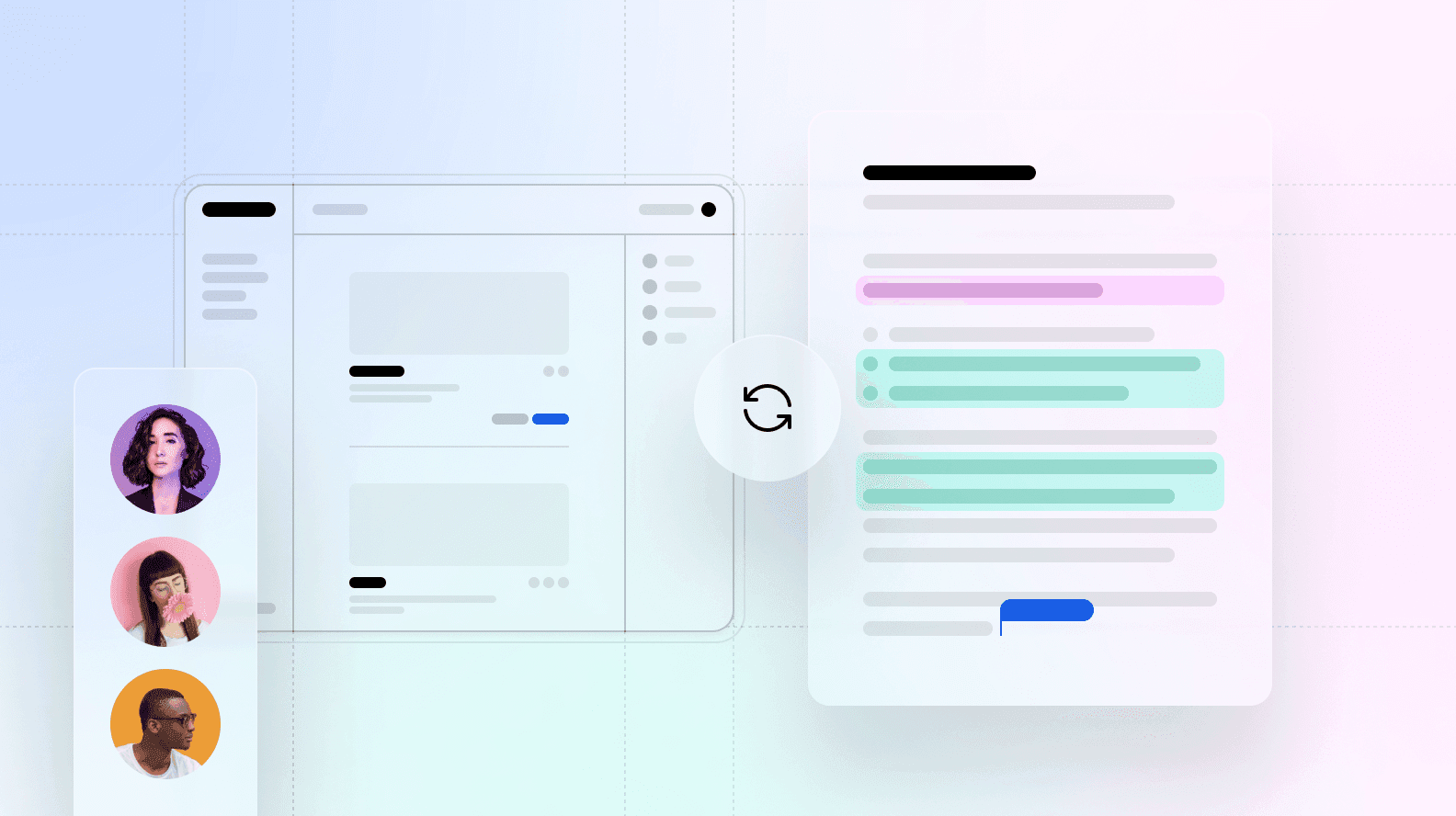
- Continuous Synchronization: This is where tools like Supernova differ from a Google Doc. AI can close the gap between what you create and what you write, ensuring that your specs are based on the current source of truth. When the design evolves, the AI helps the documentation keep up.
- Alignment on Foundations: AI can be configured to understand your specific Design System. By utilizing "product contexts," the AI ensures the features described in the PRD aren't just generic ideas, but are visually consistent and aligned with your existing product foundations.
Best practices for using AI in the PRD workflow
To maximize the impact of AI, PMs should stop treating it as a simple spell-checker and start treating it as a structure engine.
1. Start with exploration, not definition
Begin in a collaborative workspace where you can explore product ideas and generate structure before you commit to the final document. This allows for "horizontal iteration", testing concepts and outlines first, before diving into the vertical depth of detailed specs.
2. Leverage "Product Contexts"
Generic AI gives generic answers. To get usable specs, you need to utilize Product Contexts, shared AI configurations tied to your actual design and code libraries.
For example, at Supernova, we use different contexts for our design system versus our product platform. When you select the appropriate context, the AI automatically inherits your design tokens and themes. This prevents you from wasting time explaining your brand guidelines to the bot every single time.
3. Iterate in a loop
PRD writing is no longer a linear step. The modern workflow allows you to move from Prototype → PRD → Prototype as many times as necessary. Because the documentation generation is automated, you aren't penalized for making changes late in the game.
4. Connect to delivery
A PRD is useless if it sits in a silo. Ensure your AI-assisted workflow pushes updates and specifications directly into project management tools like Jira or Linear. This integration shortens the handoff and guarantees that development teams are tracking the same requirements you wrote.
Spotlight: Supernova Portal and Relay
While general tools can help you draft a paragraph, Supernova Portal offers a comprehensive solution where teams can move seamlessly from idea to delivery while maintaining the integrity of the feature.
1. From ideas to meaningful explorations
Supernova Portal enables fast, structured exploration of feature directions. New product contexts tie your explorations to your design systems, code libraries, and brand guidelines, ensuring every concept matches your actual product from the start.
2. From explorations to team alignment
Real-time collaboration brings PMs, designers, and engineers together in one shared workspace. One-click invites and smart permissions make stakeholder reviews simple. Teams can manage multiple features inside one project, keeping complex initiatives organized.
3. From alignment to production-ready specs
Supernova auto-generates structured PRDs from prototypes, requirements, and flows. As teams iterate, the specs update automatically, replacing hours of manual documentation with a system that stays in sync.
4. From specs to developers (and beyond)
With Supernova Relay, our remote MCP server that gives AI agents instant access to your design, dev, and product information in Supernova. Using Relay teams can push code directly to tools like VS Code or Cursor, generate tickets in Linear or Jira, or connect documents to ChatGPT or Claude.
Ready to supercharge your delivery?
AI is fundamentally changing how Product Managers work, enabling them to focus on the crucial question of what to build, while the AI co-pilot handles the necessary detail of how to write it down.
By adopting AI PRD tools that connect exploration and documentation in a living system, you gain confidence that your specifications are accurate, automated, and ready for development.