How to Version Design Systems: 8 Real-World Examples from Industry Leaders
Learn design system versioning strategies from IBM, Google, and Twilio. Discover semantic versioning approaches and how modern platforms simplify version management.
 Nezar MansourContent Writer
Design systems are dynamic and ever-changing. Clear versioning is essential to ensure your team works from the same and most updated source of truth. Without proper versioning, teams risk using outdated components, causing inconsistencies and inefficiencies. The best method to apply versioning is using Semantic Versioning (SemVer), a standard that provides clarity about the scale and impact of changes. Check out Nathan Curtis’ awesome series on versioning to learn more.
SemVer categorizes versions into three segments:
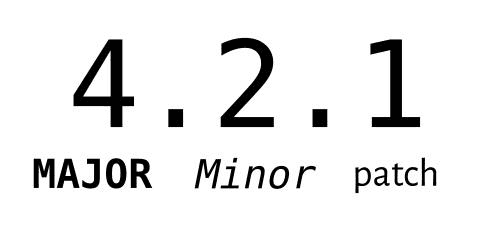
- MAJOR (X.0.0): Breaking changes that require migration planning
- MINOR (0.X.0): New backwards-compatible features
- PATCH (0.0.X): Bug fixes without new functionality
Companies apply these principles differently based on their team size, release cadence, and technical architecture. Let's examine three proven approaches.
Approach 1: Major Library Versioning for Enterprise-Scale Systems
Major library versioning applies a single version across your entire design system. This holistic approach ensures consistency when coordinating updates across multiple teams and products.
When to use this approach:
- Large enterprise teams with complex dependencies
- Systems requiring coordinated migration across products
- Organizations prioritizing stability over rapid iteration
IBM’s Carbon
Carbon by IBM employs holistic versioning, releasing major updates that encompass the entire system. This strategy benefits IBM's vast and diverse user base, including large enterprises and complex applications. By bundling significant changes into major releases, Carbon ensures all components are updated consistently, maintaining visual and functional coherence across IBM's products.
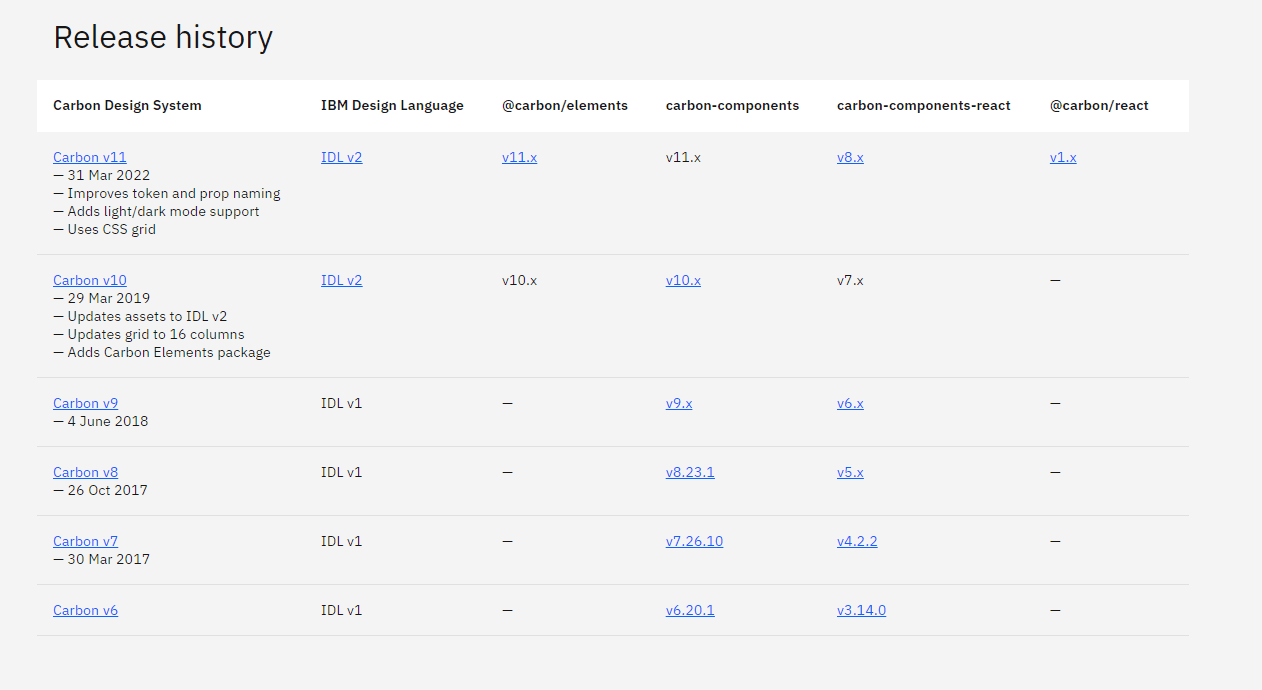
Key benefit: Teams can plan migrations with confidence, knowing all components are tested together. Comprehensive migration guides minimize risk during major transitions.
💡 Supernova Tip: Managing major version releases becomes significantly easier with design system documentation that automatically tracks component changes and generates migration guides. Teams can visualize the impact of breaking changes before releasing.
Google’s Material UI
Material UI takes a similar approach by bundling large updates into major releases, often with overhauled visual styles or restructured components. This choice ensures stability while encouraging users to adopt improvements over time. As a design system used by Android teams worldwide, focusing on major releases allows for cohesive and well-coordinated improvements. Detailed migration guides help teams upgrade confidently, reducing the risk of errors and inconsistencies.
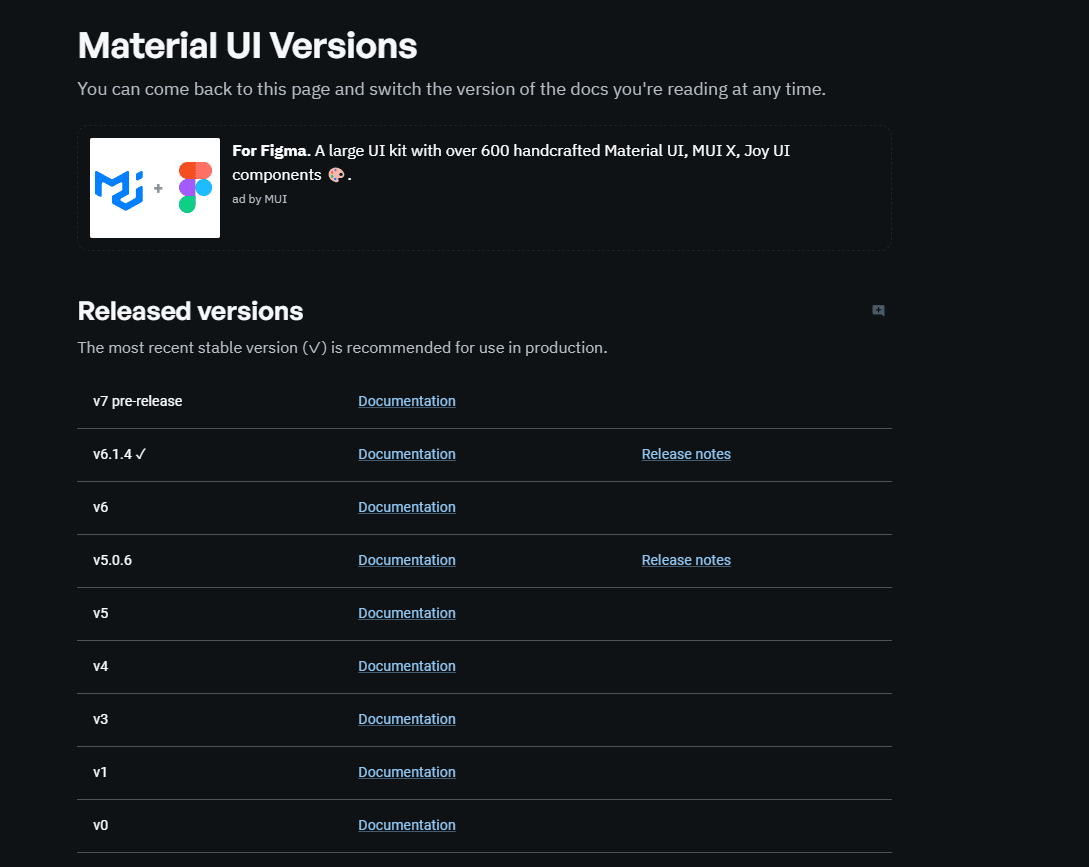
By delivering substantial updates in well-defined increments, Material UI minimizes fragmentation across Android applications, ensuring a unified user experience aligned with Google's design philosophy. They even have their own explanation of what falls under breaking, minor, and patch updates in their releases page.
Shopify’s Polaris
Similar to other design systems in this group, Polaris releases focus on bigger, wide-spanning updates. Polaris supports a very large number of teams working with Shopify and focusing on major updates helps teams migrate in a stable fashion.
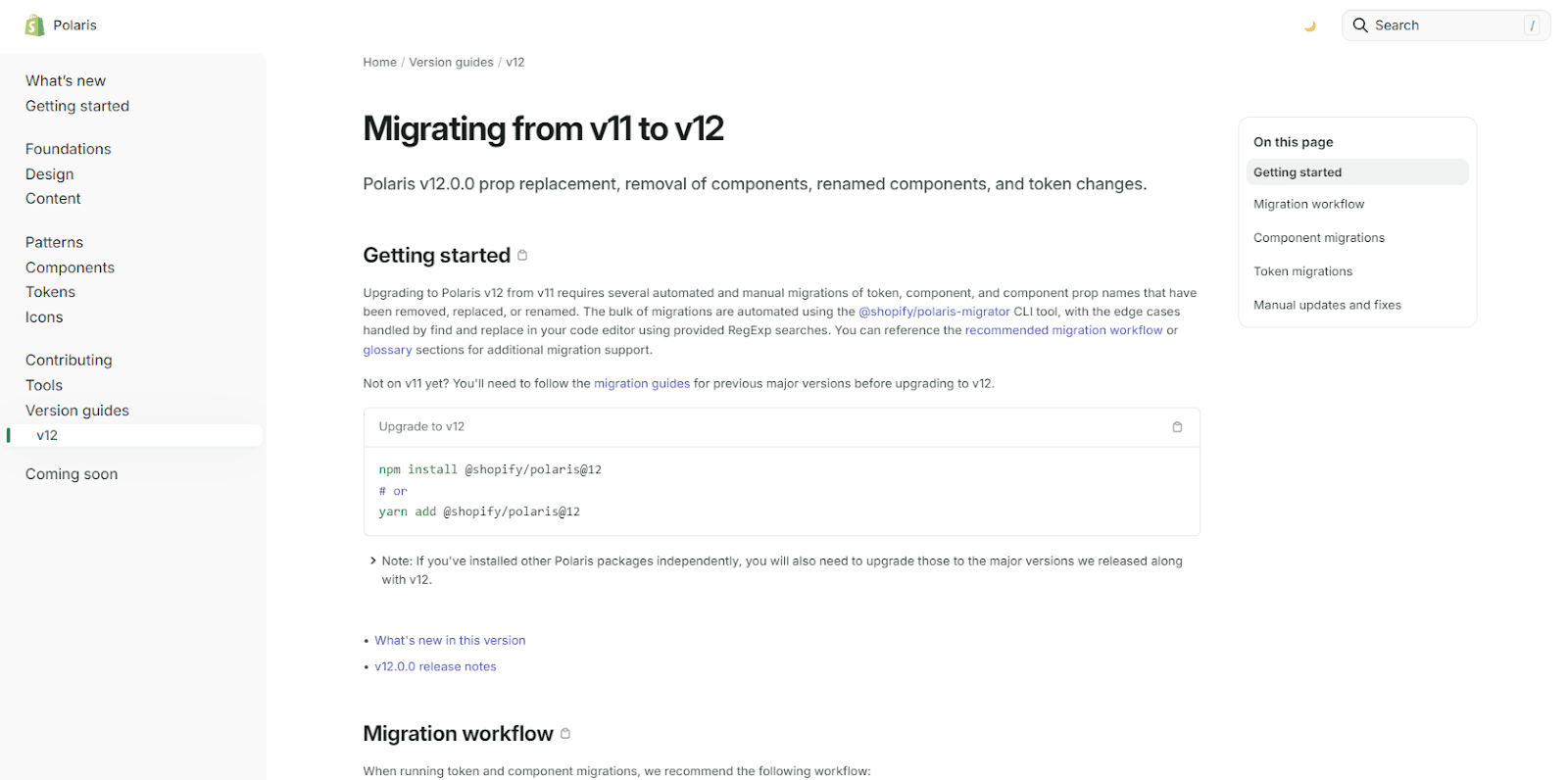
To help teams update with these huge releases, they have excellent support for migration between one version to the next with an in-depth guide.
💡 Supernova Tip: When managing major version releases, clear communication about breaking changes is essential. Supernova's collaborative documentation features let design system teams add inline warnings, migration paths, and version-specific guidance directly in component documentation.
Approach 2: Incremental Library Versioning for Continuous Improvement
Incremental versioning emphasizes smaller, frequent updates that minimize disruption. This approach suits teams that value agility and want to ship improvements continuously.
When to use this approach:
- Teams practicing continuous delivery
- Systems requiring high stability (financial services, healthcare)
- Organizations with rapid feedback cycles
Morningstar Design System
Morningstar Design System follows an incremental update strategy, balancing progress with stability. In the financial industry, where reliability is paramount, this approach allows enhancements without disrupting critical services. Teams can integrate minor improvements steadily, ensuring applications remain secure and compliant with regulations.
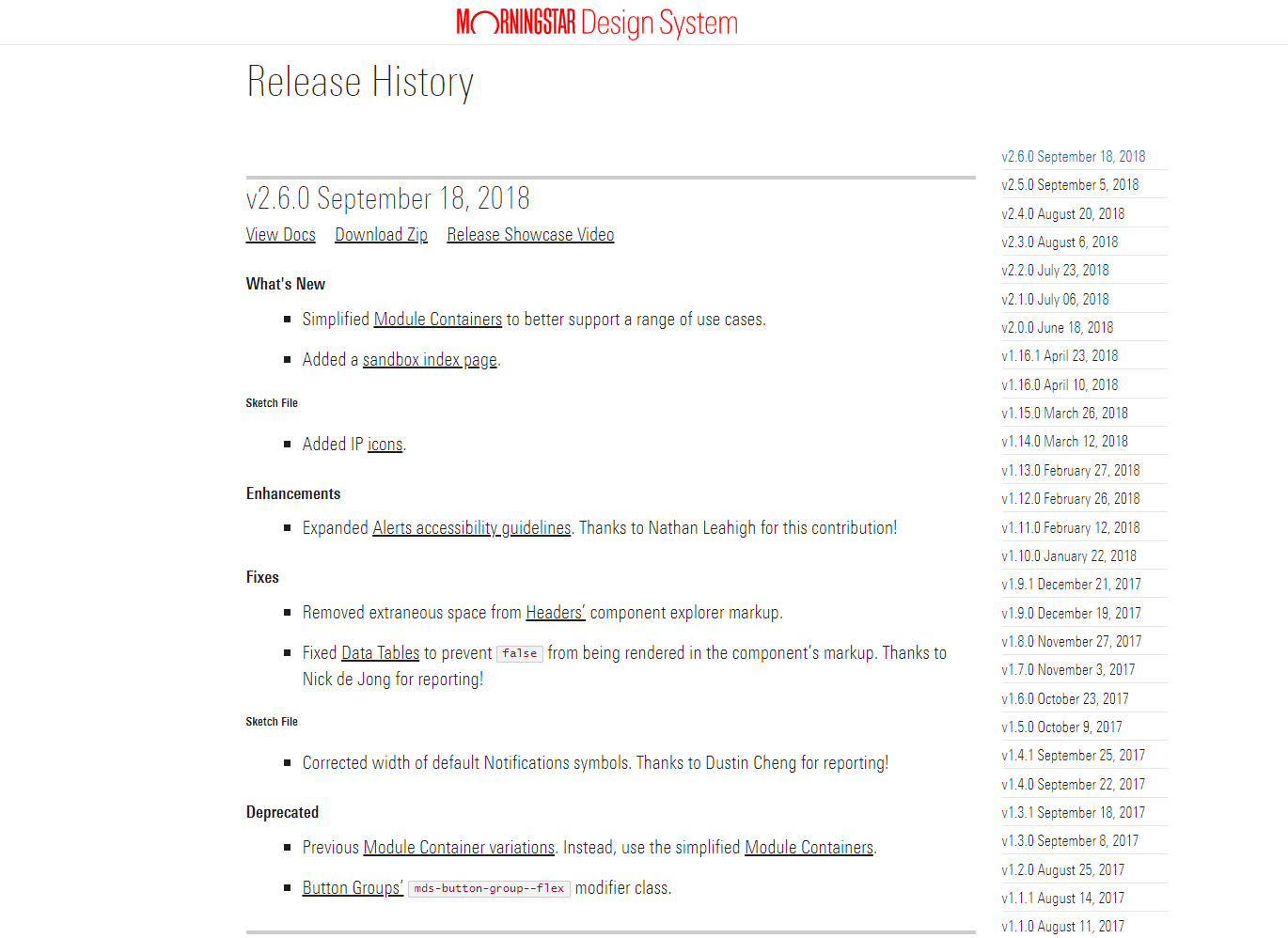
Impact: Regular, predictable updates allow teams to adopt improvements without fear of breaking production systems.
Adobe’s Spectrum
Adobe Spectrum adopts a continuous almost monthly release model, deploying collected smaller changes frequently. Since Adobe's products are widely used by creative professionals demanding stability, this approach minimizes disruptions. Incremental changes allow Adobe to refine components based on user feedback and address issues promptly.
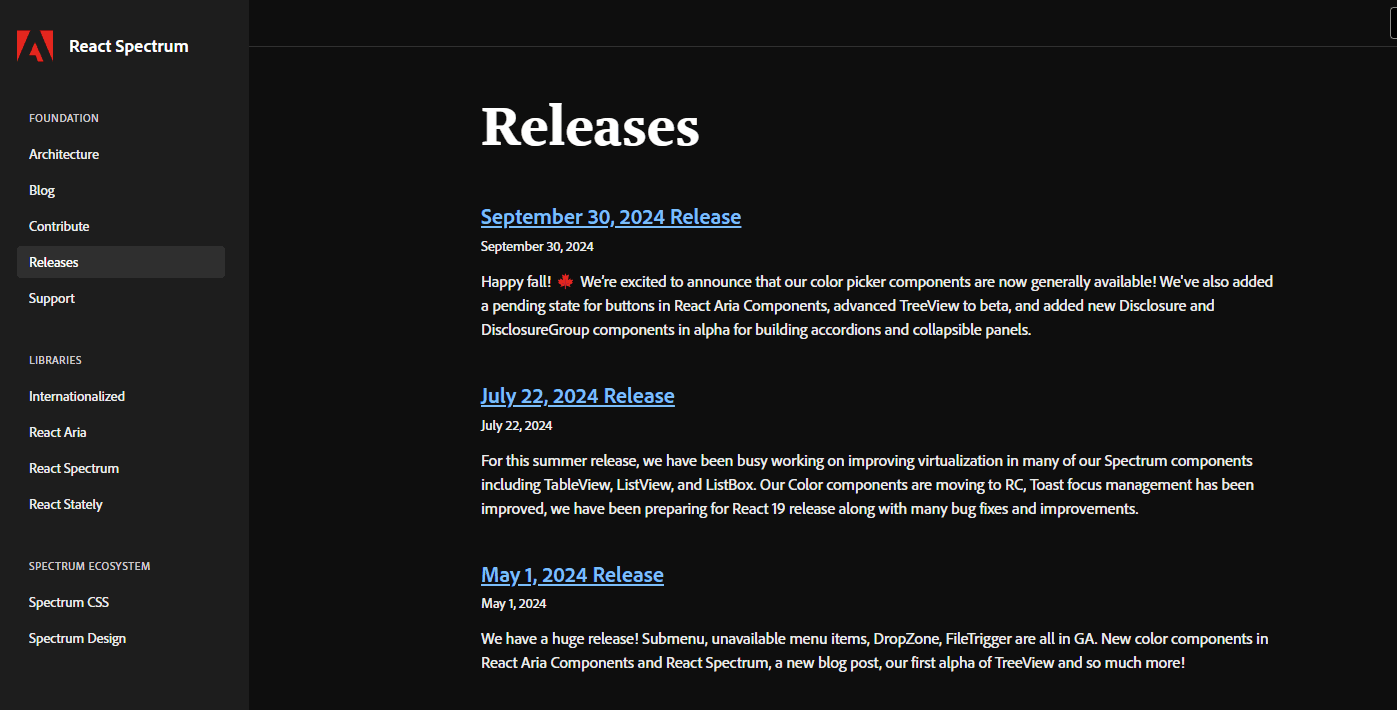
Frequent releases paired with thorough testing ensure new features don't disrupt existing workflows.
Streamline Your Release Process: Supernova's code automation converts design tokens and components to production-ready code automatically. This accelerates your release cycle by eliminating manual code updates between versions.
Salesforce’s Lightning Design System
Lightning Design System similarly employs incremental versioning, but the team instead rolls out regular updates as needed rather than every month or collecting bigger releases. This flexibility aligns with Salesforce's need to adapt rapidly while ensuring developers and partners can smoothly adopt enhancements.
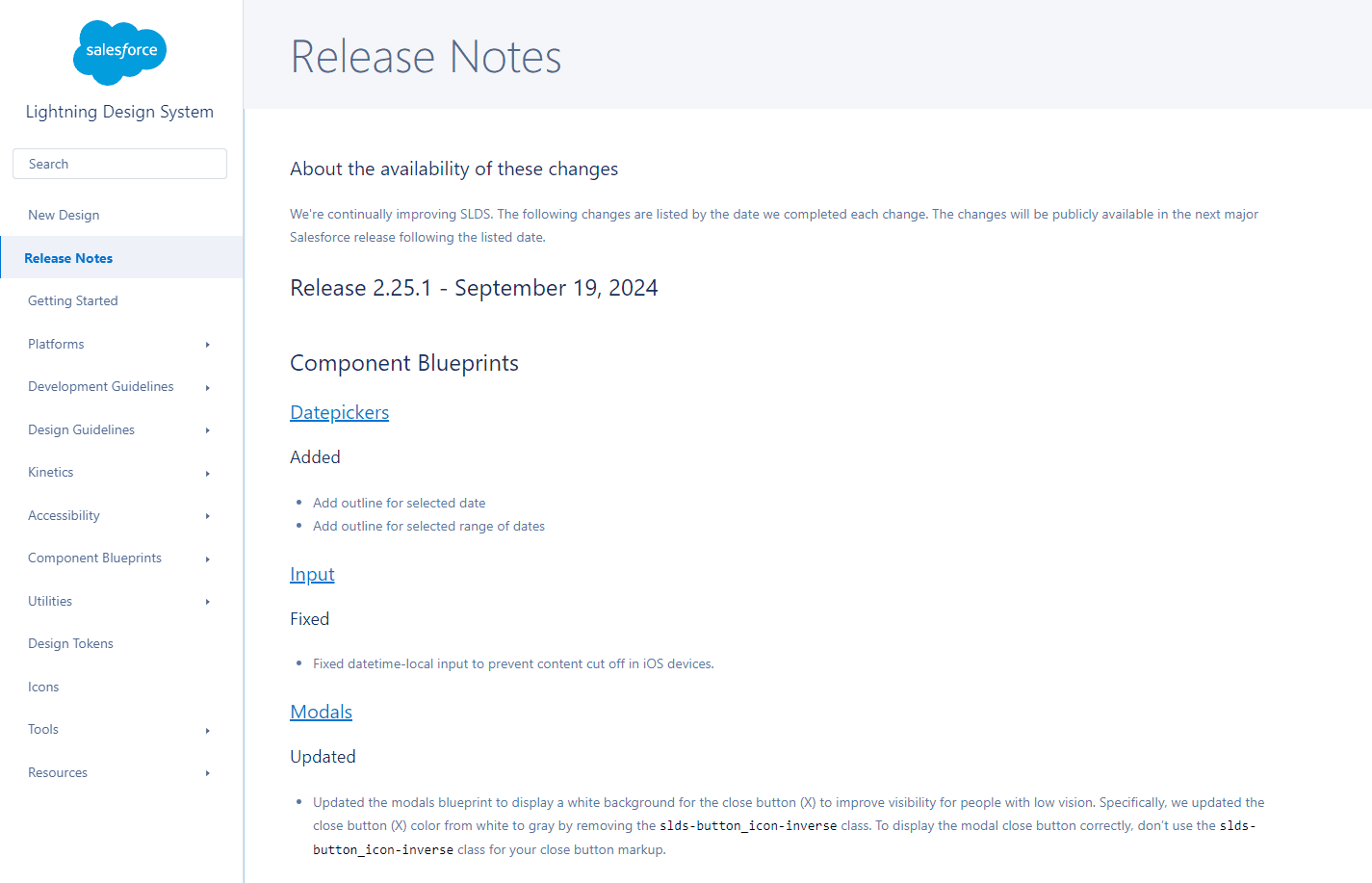
By providing incremental updates, Salesforce allows teams to progressively utilize the latest components and patterns. Detailed release notes help developers understand changes and integrate them confidently, supporting continuous improvement while maintaining essential stability.
Approach 3: Component-Level Versioning for Maximum Flexibility
Component-level versioning gives teams granular control, allowing different components to evolve independently. This modular approach provides maximum flexibility for large systems with diverse user needs.
When to use this approach:
- Systems with many independent components
- Teams needing to update specific features quickly
- Platforms supporting various implementation patterns
Twilio’s Paste
Twilio's Paste leverages both core and component-level versioning, enabling teams to update individual components as needed. Since Twilio's products integrate into various applications, updating individual components ensures teams can adopt new features or fixes without overhauling their entire codebase.
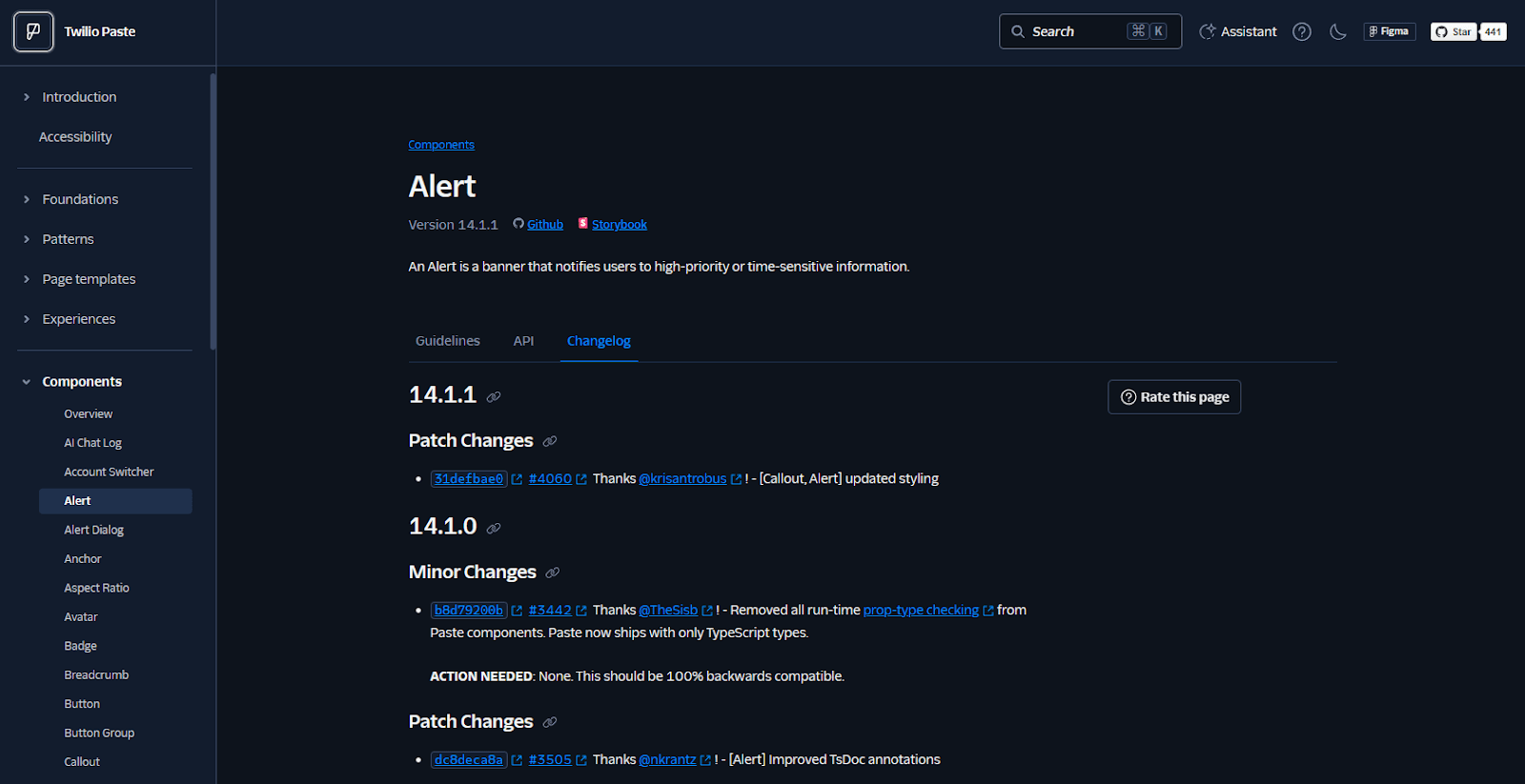
This approach minimizes disruption by allowing granular control over updates. Teams can update only the components they need, reducing unintended side effects and maintaining stability. It also allows faster iteration on specific components, enabling quick responses to user feedback or requirements.
Atlassian Design System
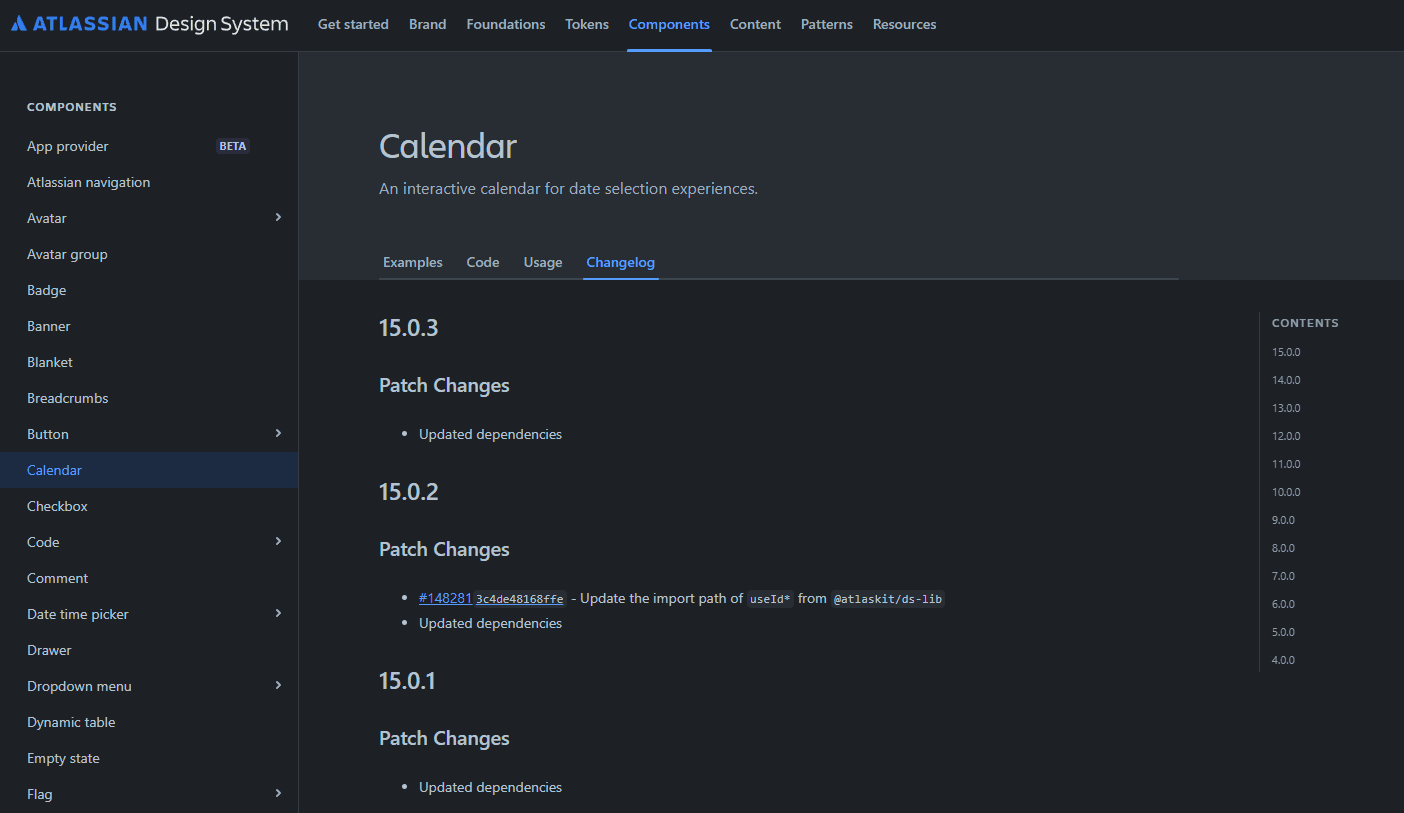
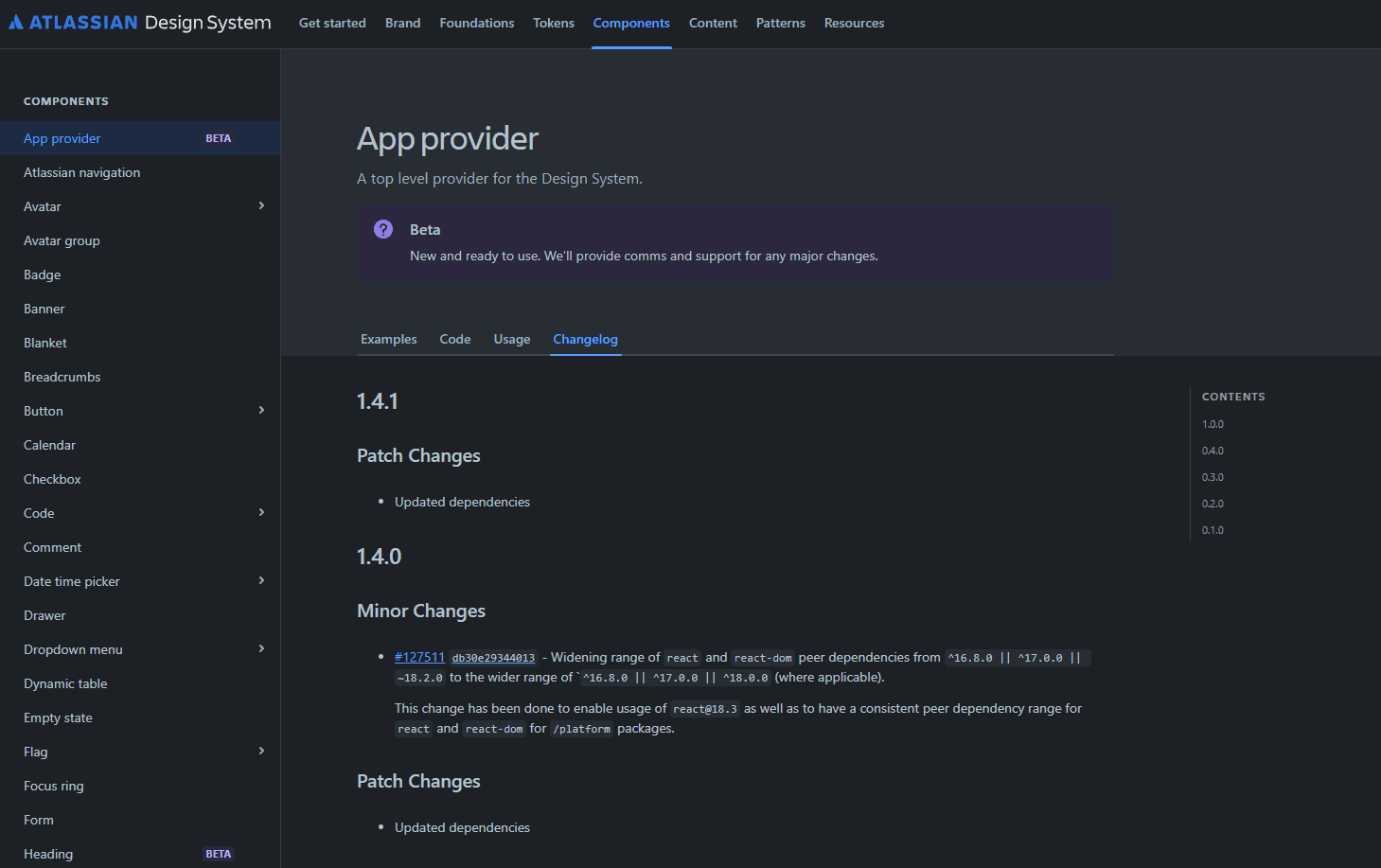
Similarly, Atlassian’s design system applies component-based semantic versioning, giving teams clarity about the type and scope of changes. Using SemVer at the component level, teams can see whether an update introduces breaking changes, new features, or bug fixes. Here you can see an older component with its long history of changes:
Compared to a new component still in beta:
This approach ensures transparency, allowing adopters to plan updates effectively. Detailed documentation for each version makes it easy to understand changes, why they matter, and how to implement updates with minimal friction. This clarity is essential for tools supporting collaboration and productivity.
Version Management Made Easy: Supernova's new container versioning feature enables semantic versioning for design system packages, giving you the flexibility to manage component versions while maintaining a cohesive system. Track changes, manage dependencies, and publish updates with confidence.
How Modern Platforms Simplify Design System Versioning
Managing versions manually like tracking changes, updating documentation, communicating updates consumes valuable time. Modern design system platforms automate these workflows.
Supernova's Approach to Version Management
Supernova provides an integrated platform that simplifies versioning across your entire design system:
Design System Management:
- Centralized token management - Track design token changes across versions
- Automated documentation updates - Documentation reflects the correct version automatically
- Visual change tracking - See what changed between versions at a glance
Prototyping with Versions:
- AI-powered prototyping - Build features using the correct component versions
- Production code generation - Export code that matches your versioned design system
- Real component imports - Prototype with actual production components, not approximations
Team Collaboration:
- Shared context and presets - Teams work with consistent version configurations
- AI assistance - Get version-aware suggestions from AI that understands your system
- External collaboration - Invite stakeholders to review versioned prototypes
For Enterprise Teams:
- Granular permissions - Control who can publish new versions
- Audit trails - Track who made changes and when
- SOC 2 Type 2 compliance - Enterprise-grade security for your design system
Why Design System Versioning Matters
Effective versioning provides:
- Predictability - Teams know when to expect updates
- Clarity - Clear communication about change impact
- Flexibility - Choose the update pace that fits your workflow
- Scalability - Support growth without sacrificing stability
- Confidence - Reduce fear of updates with transparent change management
The right versioning strategy depends on your organization's size, release cadence, and technical architecture. Large enterprises often benefit from major library versioning, while teams practicing continuous delivery may prefer incremental updates. Component-level versioning offers maximum flexibility for complex systems.
Getting Started with Better Version Management
Whether you're establishing versioning for the first time or optimizing an existing strategy:
- Audit your current approach - Document how versions are currently managed
- Choose your methodology - Select major, incremental, or component-level versioning
- Document your strategy - Create clear guidelines for version numbering
- Automate where possible - Use tools to reduce manual version management
- Communicate clearly - Ensure teams understand what each version means
Ready to streamline your design system versioning? Request a Supernova demo to see how our platform helps teams manage versions, generate code automatically, and prototype with real production components.
Give your agents a system worth following
See how Supernova documents, syncs, and serves your system in one place.