Top 10 Government Design Systems in 2026
Ten government design systems worth studying in 2026, from GOV.UK and USWDS to France and Singapore, and what they teach about government website design.
 Nezar MansourContent Writer
A government design system is a shared set of components, patterns and rules that public sector teams use to build websites and services people can rely on. It is how the best-run governments now approach government website design: one set of accessible, tested building blocks instead of every department starting from scratch.
The ten below are the public ones worth studying in 2026. All of them are live and publicly documented, and most are actively maintained, which is not something every system on lists like this a few years ago could claim.
| Country | Design system | Worth studying for |
|---|---|---|
| United States | USWDS | Accessibility as a federal requirement |
| United Kingdom | GOV.UK Design System | WCAG 2.2 guidance and research-backed patterns |
| Argentina | Poncho | A lightweight system built on Bootstrap |
| Italy | Design system .italia | A system for public administrations and their suppliers |
| France | DSFR | Treating the state's visual identity as a trust signal |
| Scotland | Scottish Government Design System | Shared assets across the Scottish public sector |
| Canada | Canada.ca design system | Mandatory elements and content guidance |
| United Arab Emirates | AEGOV Design System | Modern components on Tailwind CSS 4 |
| Singapore | SGDS | Design and code kept in step |
| Netherlands | NL Design System | Components built jointly by many organisations |
1. United States: U.S. Web Design System (USWDS)
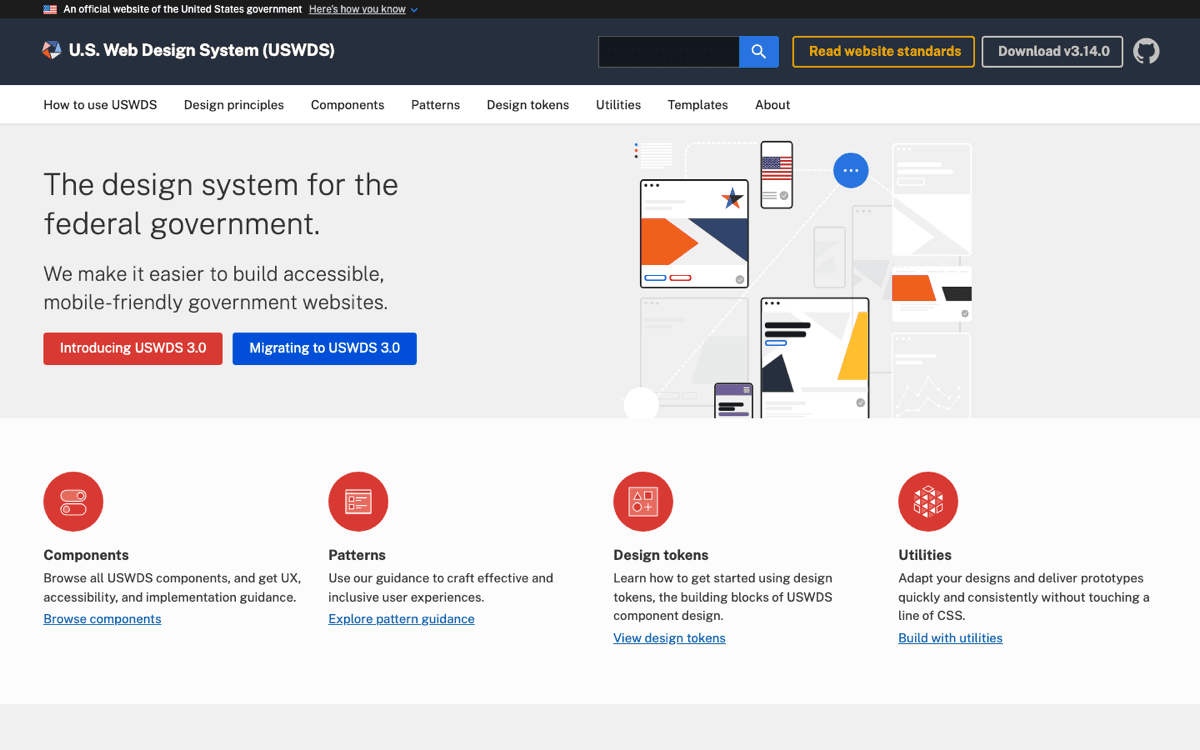
The USWDS was created in 2015 and gives federal teams a library of components and patterns for building accessible, mobile-friendly government websites. It is actively maintained, with version 3.14.0 released in August 2026, and every component carries accessibility and implementation guidance alongside its code.
Notable contributor: Dan Williams and the USWDS team walk through how to get the most from the system in a
2. United Kingdom: GOV.UK Design System
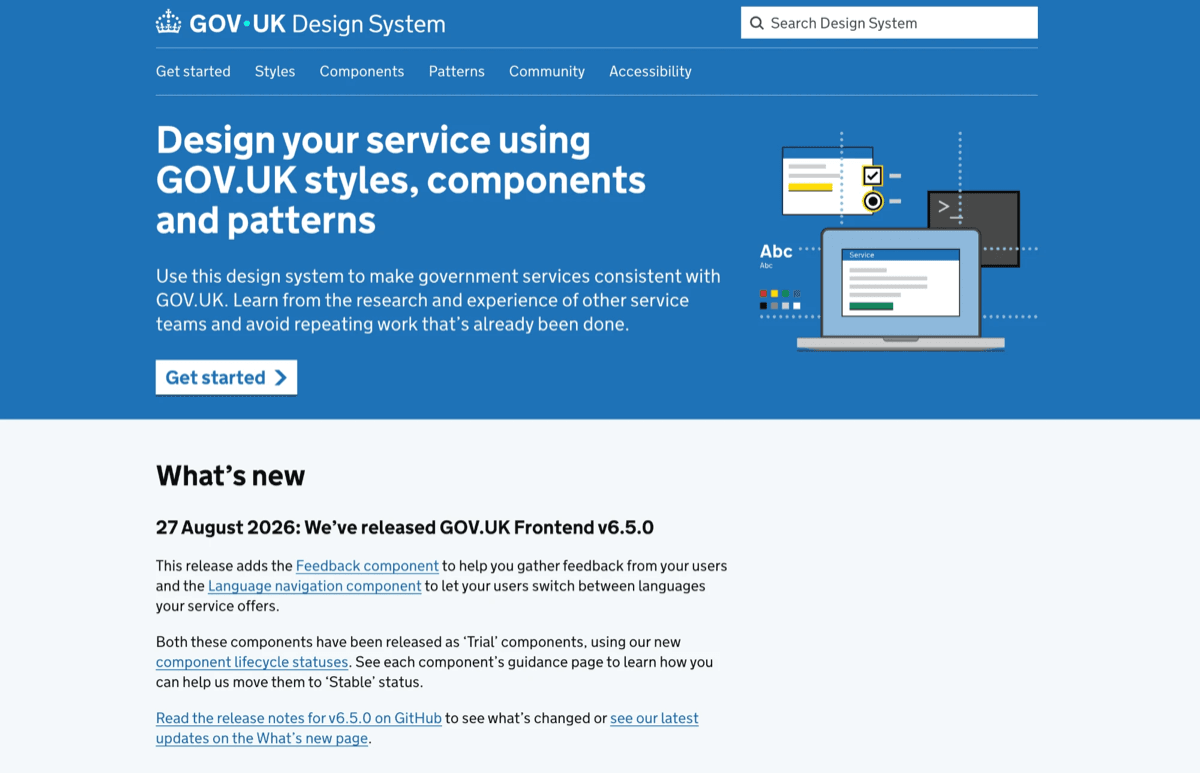
The GOV.UK Design System gives UK government teams styles, components and patterns grounded in user research. It moved to the WCAG 2.2 standard in January 2024, adding more than 50 pieces of new accessibility guidance, and teams need GOV.UK Frontend 5.0 or later to pick up those changes. GOV.UK has since refreshed its brand as well, and the latest release of GOV.UK Frontend ships only the refreshed branding.
Notable contributor: Charlotte Downs, an interaction designer who has worked on the design system team, has led conversations on
3. Argentina: Poncho
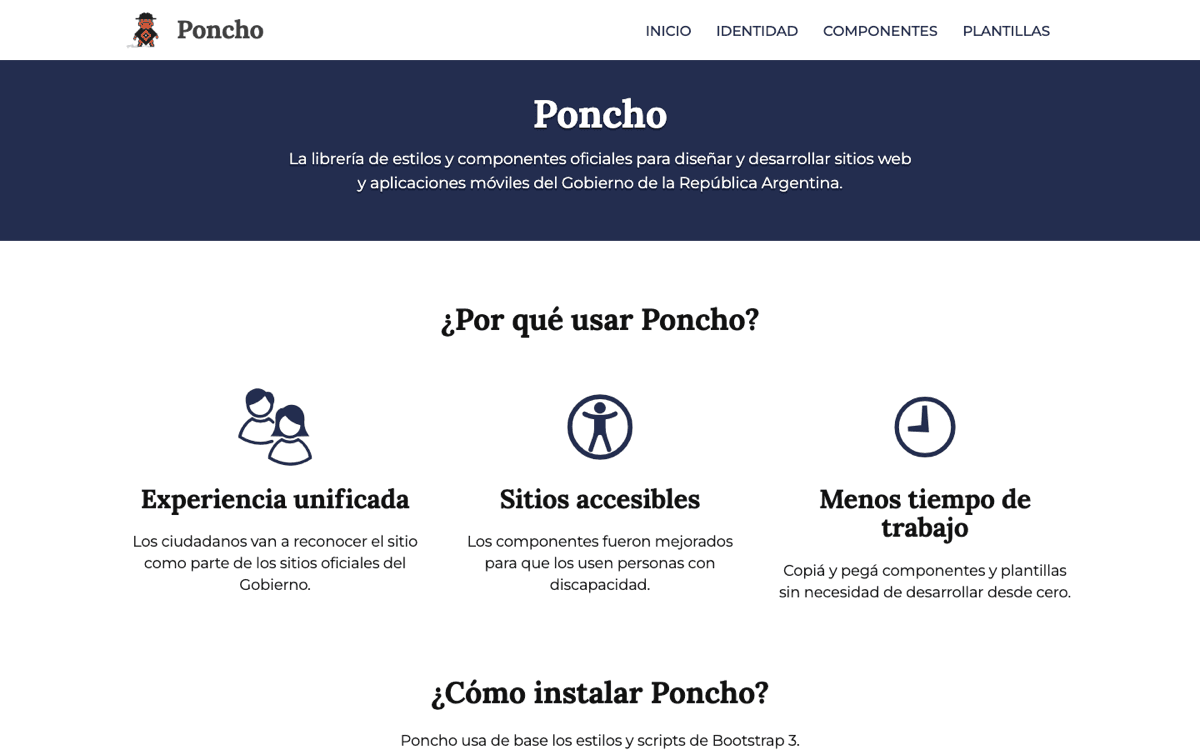
Poncho is Argentina's official library of styles and components for government websites and mobile apps. It is built on Bootstrap 3, which makes it one of the lighter systems on this list, and it leans on templates so teams can ship consistent pages without much custom work. It is still actively maintained on GitHub.
4. Italy: Design system .italia
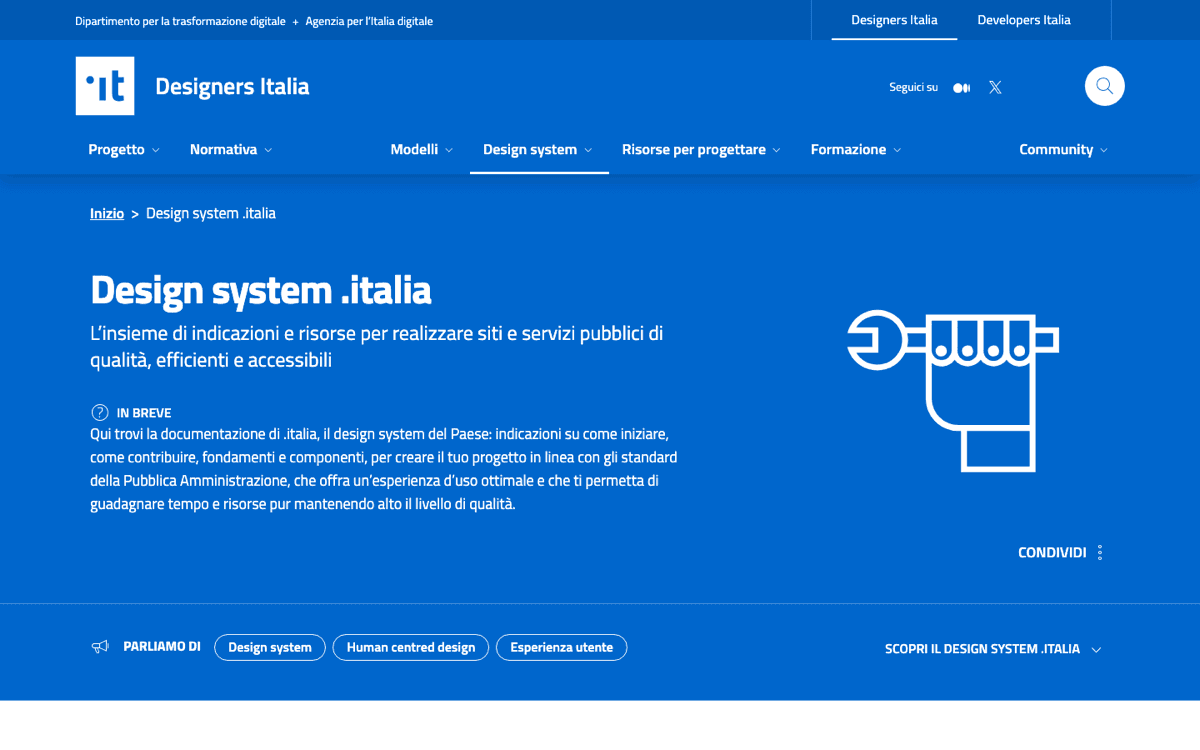
Design system .italia describes itself as the first Italian design system dedicated to public administrations and their suppliers. It ran in beta when this list was first published and has since reached version 1, covering usability, accessibility, interface design and service design. It was created by the Agency for Digital Italy (AgID) and the Digital Transformation Team as part of a wider effort to digitise public services.
Notable contributor: Daniele Tabellini, one of the system's caretakers, wrote about how it began and evolved into the open design system it is today.
5. France: Système de Design de l'État (DSFR)
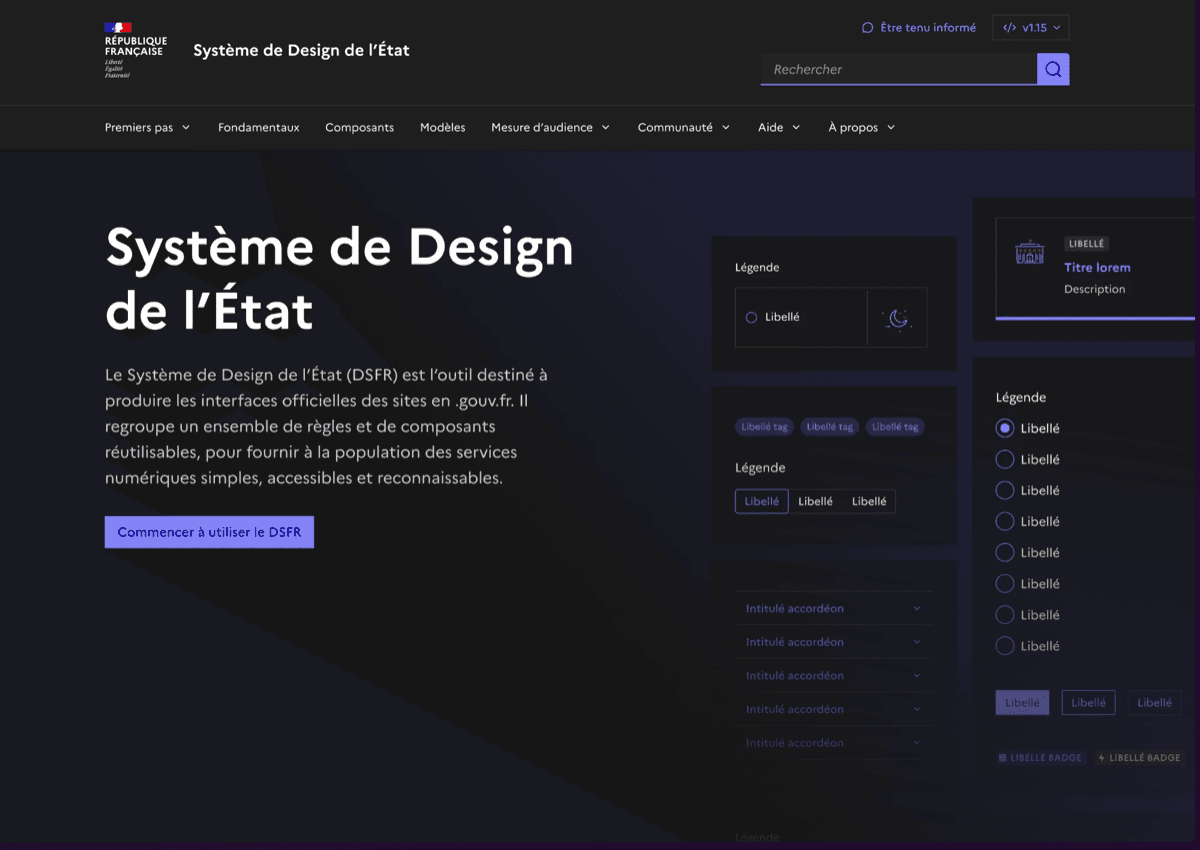
The DSFR is the French state's official design system: HTML, CSS and JavaScript components for teams building public websites. It is developed and maintained by the Service d'Information du Gouvernement (SIG) and actively updated, with version 1.15.3 released in September 2026.
What sets it apart is how it is licensed. The code is open source under the Etalab 2.0 licence, but its terms prohibit use outside French government websites, and administrations must request approval before adopting it. The design is the state's visual identity, so keeping it exclusive means a citizen who recognises it can trust they are on an official site.
6. Scotland: Scottish Government Design System
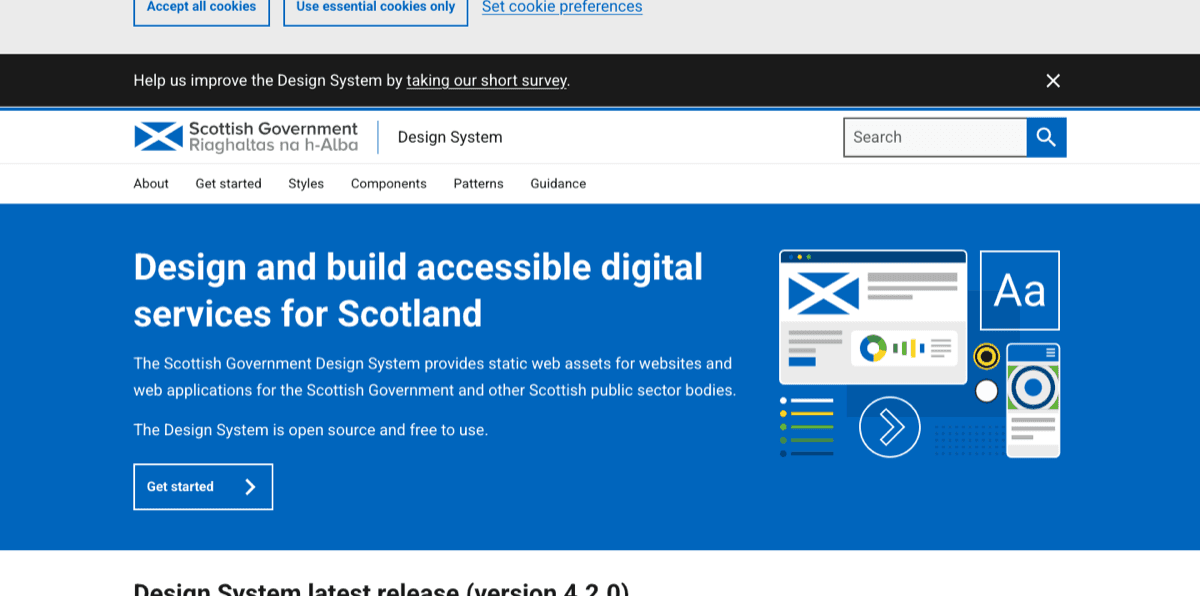
The Scottish Government Design System provides web assets for websites and applications across the Scottish Government and other Scottish public sector bodies. It has moved out of beta since this list was first published and is now on version 4.2.0. It sits alongside the Digital Scotland Service Manual, which covers service standards rather than individual components.
Notable contributor: Jonathan Sutcliffe, who has led front-end engineering on Scottish Government projects, has focused on making usability and accessibility the default for teams using the system.
7. Canada: Canada.ca design system
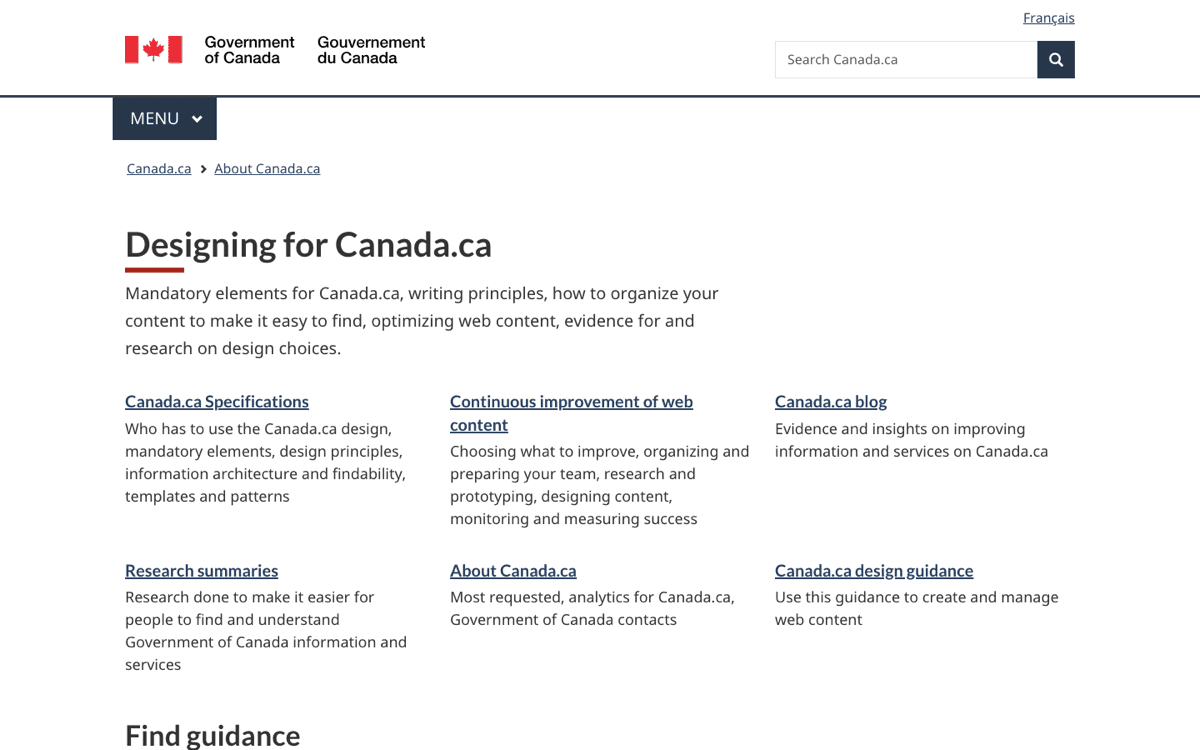
The Canada.ca design system sets the mandatory elements for Canada.ca, along with writing principles, guidance on organising content so people can find it, and the research behind its design choices. It takes a more templated approach than most systems here, which suits a single federal web presence. The team publishes updates on the Canada.ca blog.
Notable contributor: Aaron Snow, former CEO of the Canadian Digital Service, played a key role in the early work and wrote about how the service began.
8. United Arab Emirates: AEGOV Design System
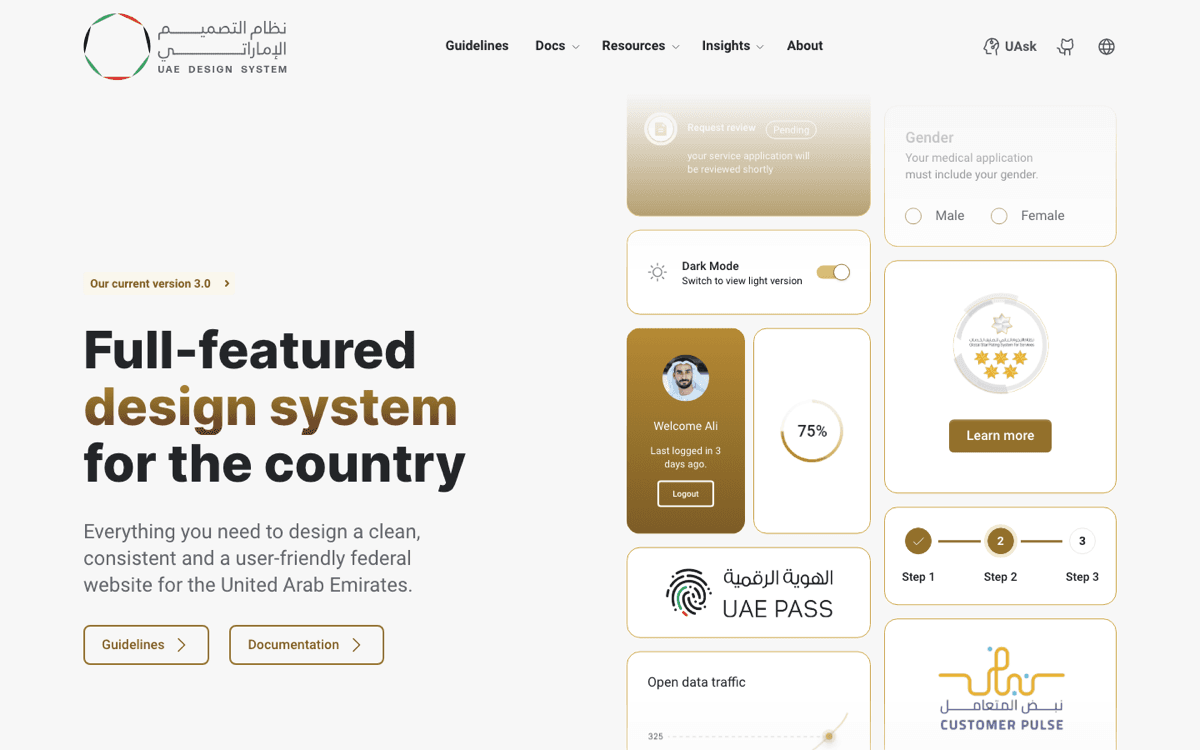
The UAE Government Design System stands out for its modern components and extensive documentation for building government websites and apps. It has now released version 3.0, which adds compatibility with Tailwind CSS 4, an upgrade tool and a round of component improvements.
Notable contributors: The system is a collaboration between the Telecommunications and Digital Government Regulatory Authority (TDRA) and the agency Conceptualize. Manal Al Afad led the government side and Moiz Sitabkhan, CEO of Conceptualize, led the agency's work on version 2.0.
9. Singapore: Singapore Government Design System (SGDS)
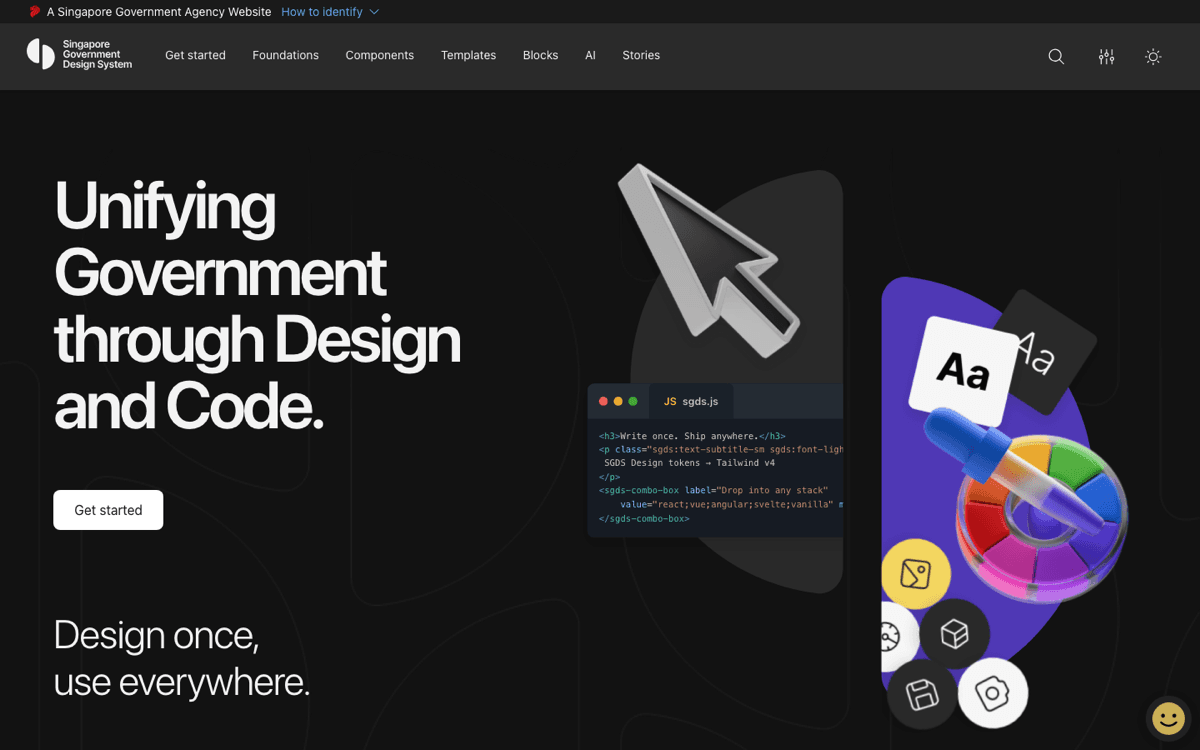
SGDS gives Singapore's agencies a common set of components, patterns and templates for fast, accessible, mobile-friendly services. Its own line is "Design once, use everywhere", and it is one of the most actively developed systems on this list, with version 3.29.0 of its web components released in September 2026.
Notable contributor: Rachel Tan, a designer for the Singapore Government, has argued that designing for public good does not have to be slow or bureaucratic, and described the team's rapid testing and annual hackathons in a
10. Netherlands: NL Design System
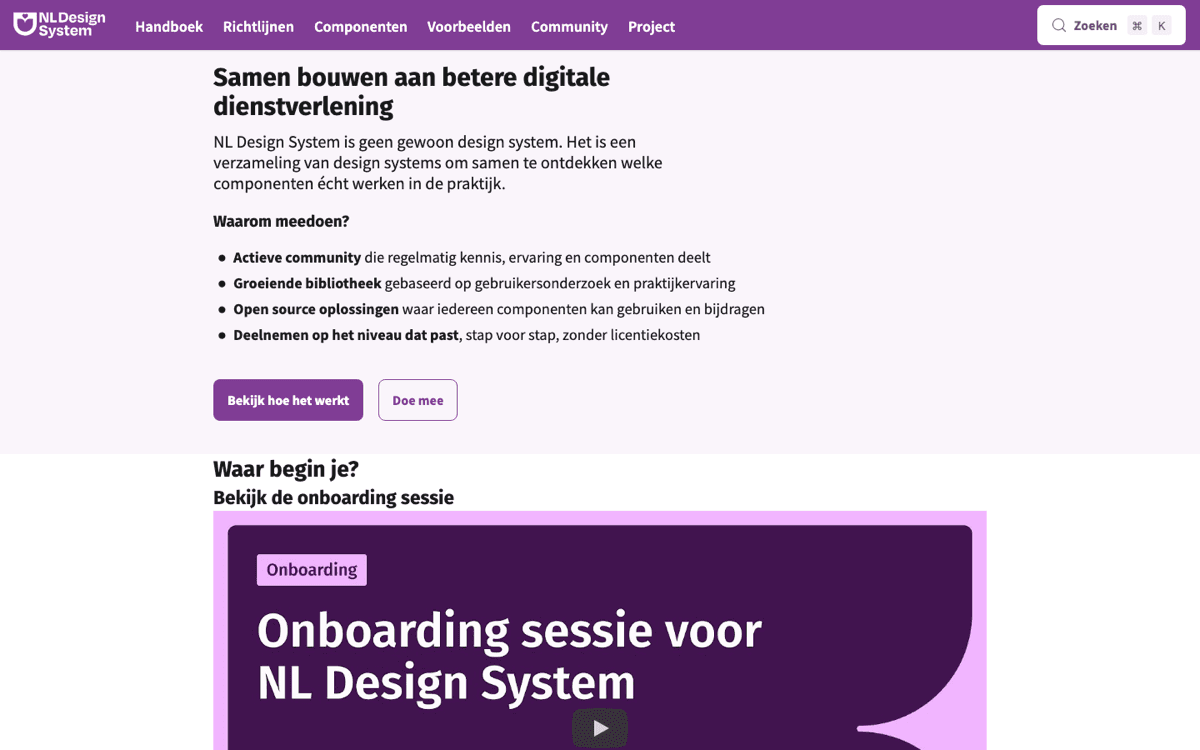
The NL Design System describes itself as a collection of design systems, used to work out together which components actually work in practice. Government organisations and independent contributors build components jointly instead of relying on one central team, and the project is actively maintained in the open.
Notable contributor: Robbert Broersma, one of the initial contributors, explained the community-driven approach in a
What government teams do better than most
Three habits show up across almost every system on this list, and most private sector teams could borrow them.
- Accessibility is built into each component. USWDS and GOV.UK attach accessibility guidance to every component, so meeting the standard is part of using it.
- The work happens in the open. Nearly all ten publish their code, their roadmaps or their decisions publicly, which is how systems like NL Design System and .italia attract outside contributors.
- Templates do the heavy lifting. Canada.ca and Poncho lean on page templates, so consistency comes from starting in the right place rather than from policing every page after launch.
The next audience for these systems
Every system above was written for people to read, which made sense when people were the only ones building with it. Public sector teams now use AI coding tools too, and an agent building a service needs to resolve a component, a token and a variant rather than interpret a paragraph of guidance.
That is the problem Supernova works on: serving a design system as structured context an agent can query, generated from the system itself. For more systems worth studying outside government, see our design system examples.
Give your agents a system worth following
See how Supernova documents, syncs, and serves your system in one place.