What Makes a Design System Enterprise-Grade in 2026
What makes a design system enterprise-grade in 2026: seven criteria covering tokens, multi-brand architecture, access control, releases, adoption data and agent context.
 Nezar MansourContent Writer
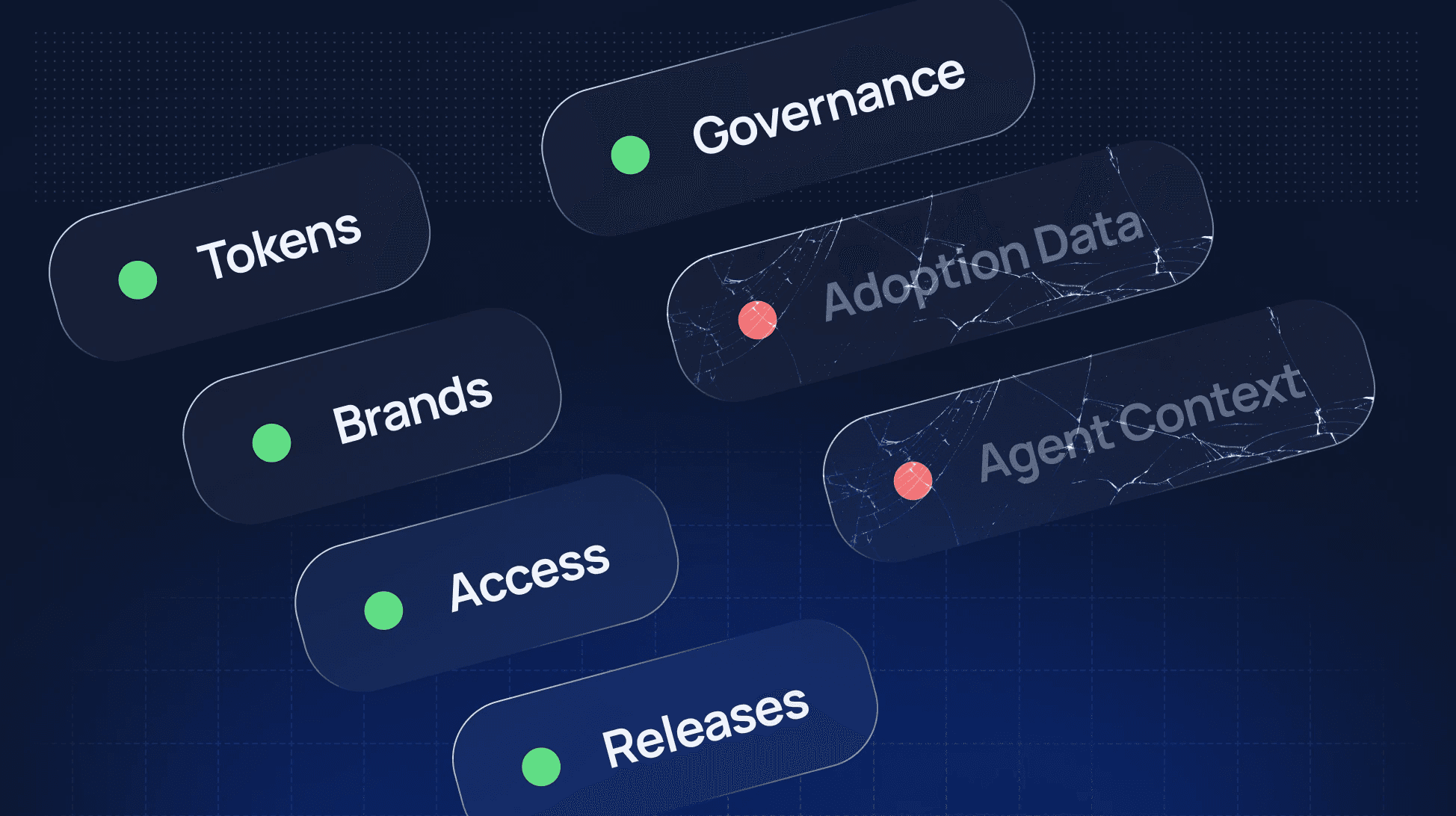
Search for a definition of an enterprise design system and you get a consistent answer: principles, patterns, components, a style guide, documentation, accessibility standards, and a governance process. The most-read guide on the subject spends close to 5,000 words on that list without mentioning design tokens once.
That definition describes a style guide. It was a fair description in 2019, and plenty of organisations still buy against it, which is why their systems stop working somewhere around the fifteenth consuming team.
An enterprise design system stays correct and usable as the number of consumers grows, across brands, platforms, and now agents. Headcount is not the qualifier. Most teams that fail these criteria are running perfectly good component libraries.
Seven things decide it.
The short version. Enterprise-grade means your design system survives being used by people who will never meet you. That requires tokens as data, brand architecture, real access control, versioned releases, an adoption signal, machine-resolvable context, and a governance loop that works at forty teams. Component quality is assumed. It has never been the constraint.
Are your tokens data, or pictures of data?
Tokens are enterprise-grade when a machine can fetch the current value without a human reading a page.
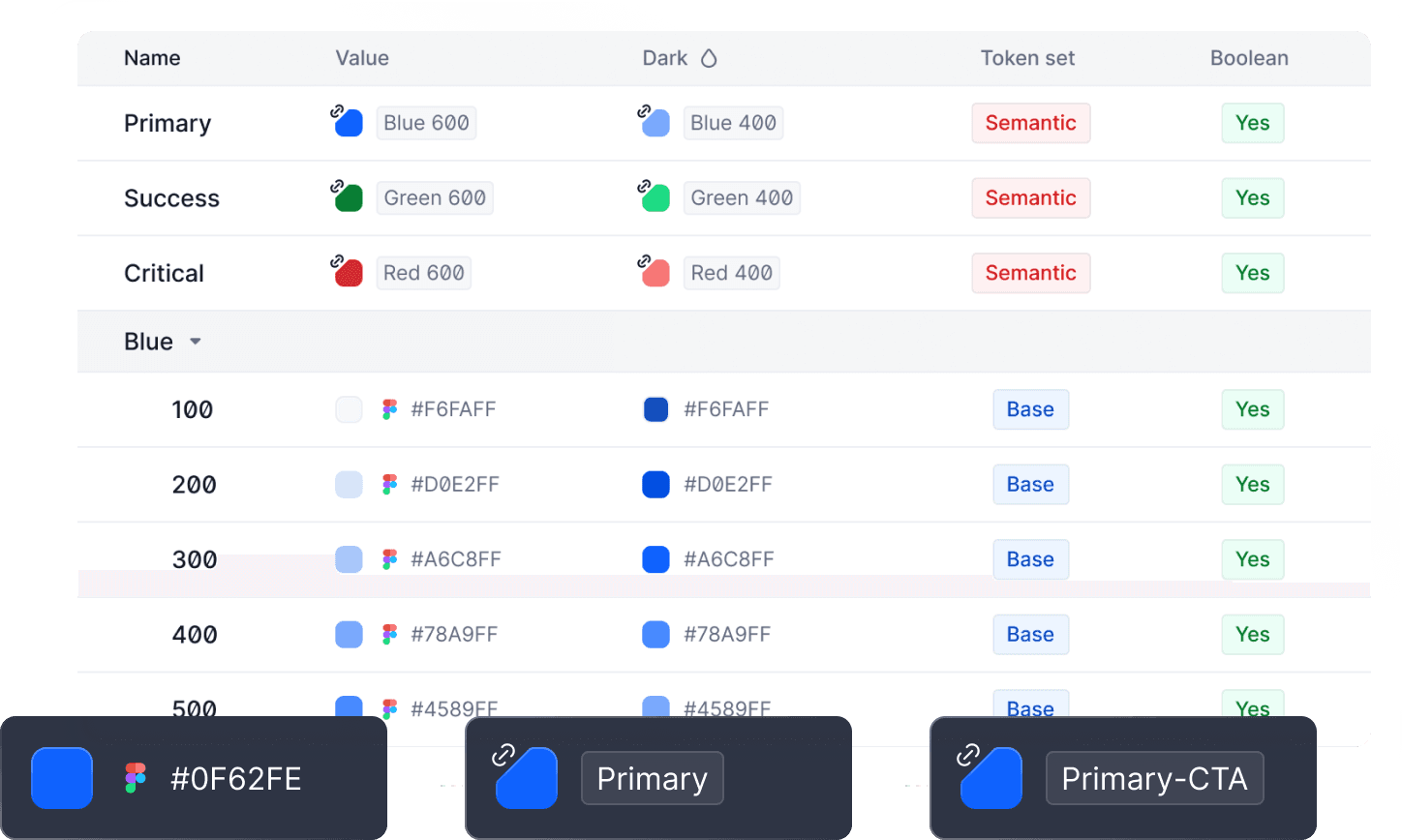
Most systems fail this one. If your colour ramp exists as swatches on a documentation page, a Figma library, and a hardcoded SCSS file that someone syncs by hand, you have three sources and no source of truth. Every consumer downstream is guessing which one is current.
Try it: can a build pipeline, a linter, and an agent each retrieve the resolved value of a token right now, from the same place, without anybody exporting anything? If the answer involves a person, you have documentation rather than infrastructure, and documentation drifts.
Can it hold more than one brand?
Multi-brand is the point at which most systems get rebuilt rather than extended.
What survives is one shared token architecture with brands expressed as themes over it, so a spacing decision made once applies everywhere and a brand-specific colour overrides only what it needs to. Run a separate design system per brand and you multiply every maintenance job by the number of brands, which guarantees they drift apart.
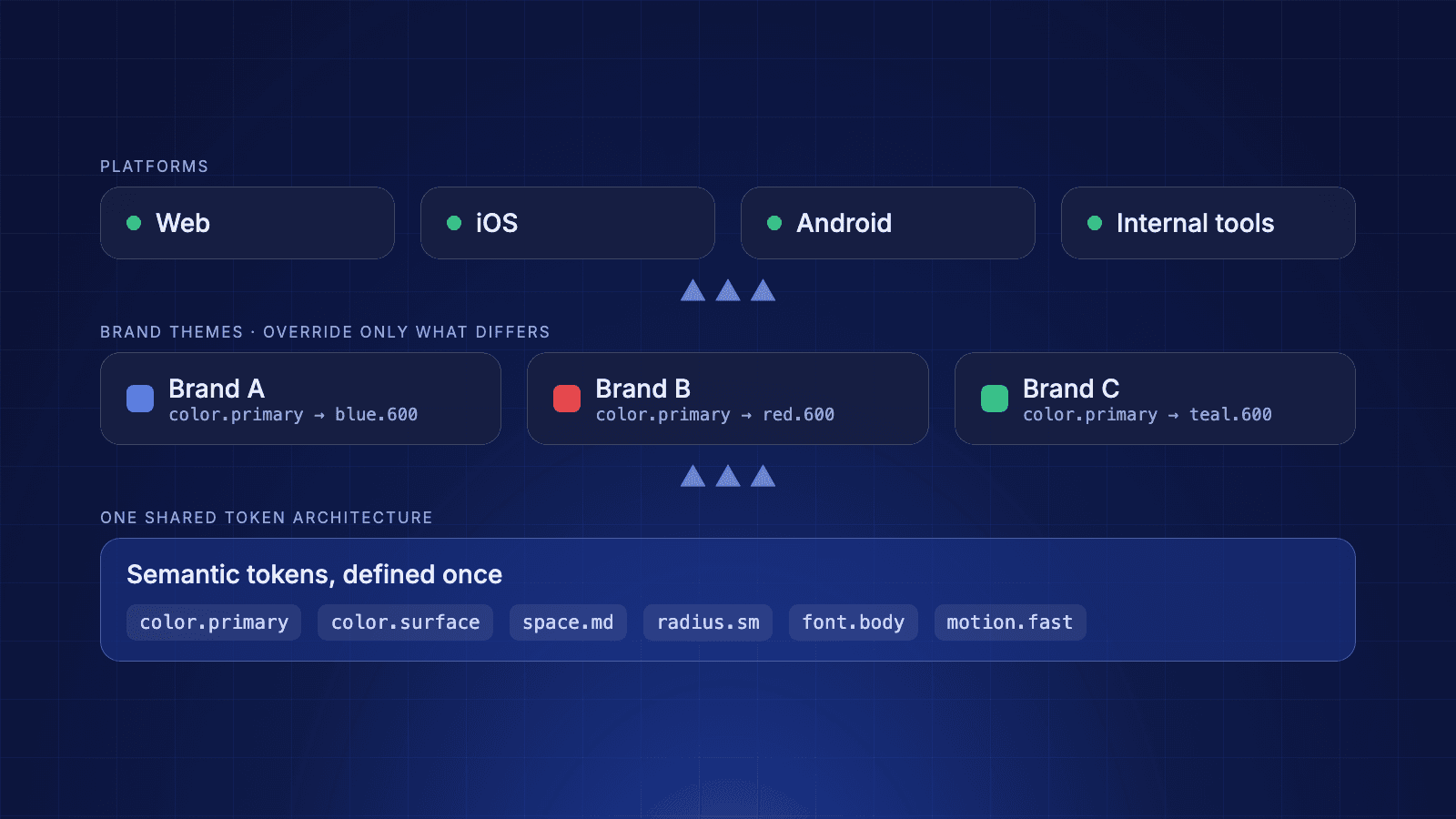
The same logic applies to platforms. Web, iOS, Android and any internal tooling should resolve from the same semantic layer rather than maintaining parallel definitions of what "primary" means.
If adding a brand means duplicating the system, you have a template.
Who can see what?
Design-led definitions skip this one entirely, and it's the criterion most specific to enterprise.
At a thousand people you have contractors, agencies, acquired teams, and regulated products that can't share a namespace. Enterprise-grade means access control at the level of workspaces, contexts and individual documentation, single sign-on with SCIM provisioning so joiners and leavers are handled by your identity provider rather than by someone remembering, and audit trails that satisfy a security review.
It also now means deciding what your agents can reach. An agent connected to your design system inherits the permissions of whoever connected it. If that isn't scoped deliberately, you've created a retrieval path around your access model without anyone approving it.
Are releases a product behaviour or a team convention?
Versioning is enterprise-grade when a consuming team can stay on an old version deliberately and find out what they're missing.
That needs semantic versioning, changelogs generated from real changes, a deprecation policy with a stated timeline, and a migration path published before the deprecation lands. Not a Slack message. Forty teams cannot be coordinated by announcement.
What happens to the teams still on last quarter's version? If nobody can name them, that's the next criterion.
Do you know who uses it?
You need adoption data that exists without someone building a reporting job.
Which products consume the system, which components they use, which ones they've forked, and where hardcoded values have crept back in. Without it, adoption is anecdote, and the design system team spends its credibility on assertions it can't support when someone asks what the investment returned.
Leadership asks for this number more than any other, and design system teams are least equipped to produce it. That combination is why it belongs on the criteria list.
Can an agent resolve an answer from it?
Only this criterion is new, and it's what separates a 2026 definition from a 2019 one.
Your design system now has a class of consumer that can't ask a follow-up question. An agent generating a component has to pick a specific token, variant and state. Prose that says "use the primary button for primary actions" tells it what to think and nothing about what to output. That gap is what an agentic design system closes.
Enterprise-grade means the system is queryable as structured data, scoped per team or workflow rather than served whole, and generated from the system rather than maintained as a copy. The AGENTS.md standard works well as an orientation layer for conventions, but it was never built to carry reference data, and treating it as your design system produces the hand-maintained duplicate this criterion exists to prevent.
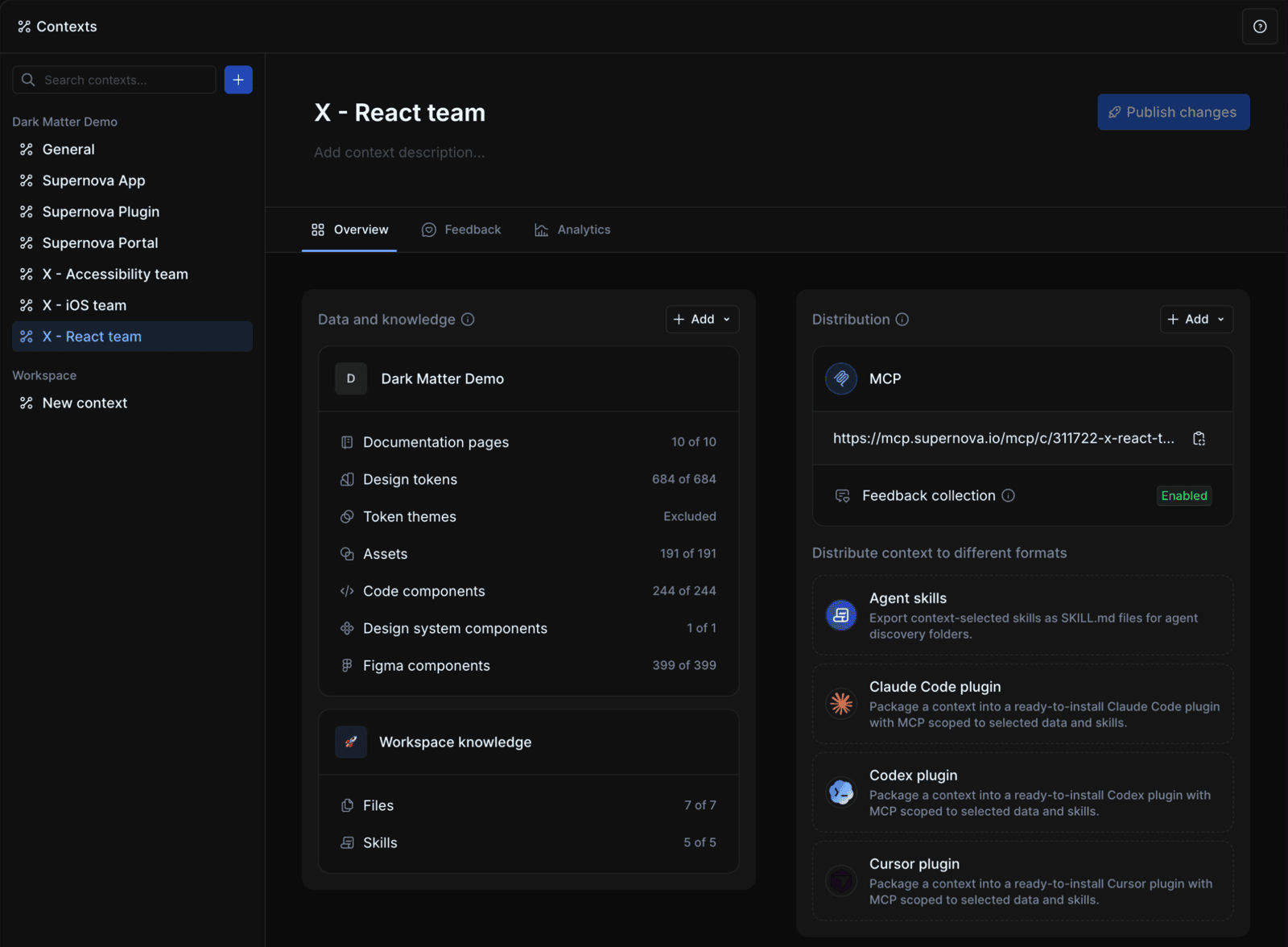
If you can't answer what your agents read, they're reading something, and it's probably out of date.
Does the governance loop survive contact with forty teams?
Governance is enterprise-grade when contribution and feedback are routed by the system rather than by the design system team's attention.
Every definition mentions governance. Most mean a contribution model and a review process, which works while the design system team can personally read everything. At enterprise scale you need requests and feedback captured where the work happens, approval workflows that don't depend on one person being online, and a way to see what's being asked for across all consumers rather than in whichever channel someone chose.
The failure mode is quiet. Nothing breaks. The system simply stops absorbing what teams need, so teams start solving their problems locally, and a well-maintained design system turns into a museum.
The checklist
| Criterion | Enterprise-grade | Not yet |
|---|---|---|
| Tokens | Queryable, resolved on request, one source | Documented on a page, synced by hand |
| Brands and platforms | Shared architecture, themed per brand | One system per brand |
| Access | SSO with SCIM, granular permissions, audit trail | Shared logins, manual offboarding |
| Releases | Semver, deprecation policy, published migrations | Announcements in chat |
| Adoption | Data available by default | Anecdote and estimates |
| Agent context | Structured, scoped, generated from the system | A markdown file someone updates |
| Governance | Routed and tracked across consumers | Depends on the team's attention |
Count your left column. Two or three, and your components are not the thing holding you back. Six or seven, and whatever is still going wrong is an organisational problem rather than a tooling one.
The order to fix them in
Adoption data and agent context are the two that fail first, for the same reason. Both need the design system to exist as data, and most systems were built to be read.
Tokens first, because six of the other criteria depend on them being data. Access control next if you're regulated or you work with contractors, because retrofitting it means redoing your workspace structure. Adoption data before somebody asks you for it.
Governance last, and deliberately so. It's the one everybody starts with, and a contribution model laid over a system nobody can query just formalises the bottleneck.
Structured tokens, components and documentation with SSO, SCIM and granular permissions over the top, contexts published per team so each agent gets its relevant slice, and adoption tracking nobody has to build: that combination is what Supernova's enterprise platform exists to provide. If you want a number for what the gap costs you today, the ROI calculator works from team time rather than component counts.
None of this describes a better style guide. It describes what a design system needs in order to still be correct when the people using it have never spoken to the people who built it.
Give your agents a system worth following
See how Supernova documents, syncs, and serves your system in one place.